
IRS Is Giving Out Money
In this issue:
- Latest in Retirement Savings & Personal Finance
- IRS Is Giving Out Money
- Tools & Tips: RSU (Restricted Stock Unit) Calculator
- Market Overview
Latest in Retirement Savings & Personal Finance
January Layoffs Surged
Based on Challenger data, U.S. layoffs in January 2026 surged to a 17-year high, last seen around 2008 or 2009 (to be verified). The chart below shows the layoff trend since 2000.
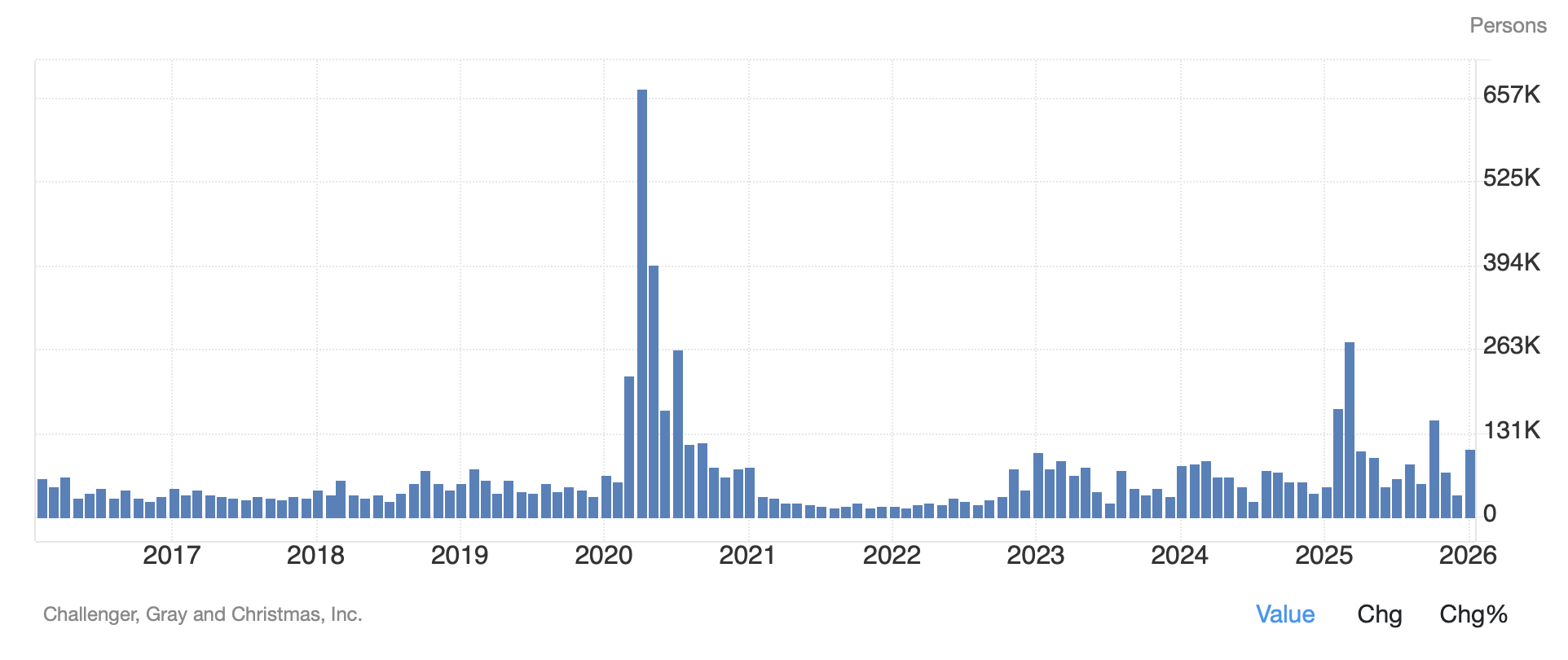
Notice the number is no where close to those in 2020. But the headline is on January’s comparison, thus this somewhat sensational title.
The job cuts were relatively broad-based. Tech firms cut roughly 42,000 jobs, financial services reported about 28,000 layoffs, retail saw close to 24,000, and manufacturing and healthcare also contributed notable numbers. Since the job market is usually very sensitive and closely tied to the broader economy, this development may be a real concern. Possible causes include AI-related adjustments, as improving productivity and increased investment in AI push companies to reduce labor costs. Another potential factor, of course, is the impact of tariffs.
Vanguard announced another round of fee cuts. In the latest move, they lowered expense ratios across 53 ETFs and mutual fund share classes, continuing their long standing push to reduce costs for investors. According to Vanguard, these changes are expected to save nearly $250 million for investors in 2026. Vanguard said these cuts come on top of reductions made last year, bringing the combined savings over the past two years to roughly $600 million and pushing its average asset-weighted fee down to around 0.06 percent.
Now You Can Pay Your Rent With Buy Now, Pay Later
Affirm is expanding buy now, pay later into a place most people didn’t expect, rent. The company announced a new option that allows renters to split rent payments into installments, instead of paying the full amount upfront each month. On the surface, it sounds convenient, especially for households dealing with uneven cash flow or short-term expenses. Rent is often the largest monthly bill, so giving people flexibility around timing can feel like a relief. It’s also a clear sign that BNPL is moving beyond discretionary spending and deeper into essential, recurring costs.
But this shift is not without risk. Rent is not a one-time purchase, it comes back every month. Turning a fixed obligation into financed installments can quietly stack liabilities if income doesn’t keep up. For some renters, this may smooth temporary stress. For others, it could become a way to borrow against future paychecks just to stay current. More broadly, the move says something about the consumer environment. When BNPL starts showing up in rent, it suggests affordability is being stretched, and financial tools are being asked to patch structural pressure rather than fund optional spending. Whether this becomes a niche product or a widespread crutch is something worth watching closely.
Our suggestion: do NOT be tempted unless you have exhausted out all other options.
IRS Is Giving Out Money: 2026 Tax Bonuses
2026 tax season has several changes that are very measurable. Not all of them apply to everyone, but the ones that do, they can save real money. We compile the following list (see detailed article here):
1. Standard Deduction Increases Significantly
Due to inflation adjustment and new tax rules, the standard deduction reaches a new high.
- Single filers: $15,750
- Married filing jointly: $31,500
- Head of household: $23,625
This means more income becomes automatically tax-free before any tax calculation begins. For many households, it is a direct reduction in taxable income.
2. SALT Deduction Cap Increases to $40,000
This is a major change for people in high-tax states (California, New York, New Jersey, and similar).
- Previous cap: $10,000
- New cap (2025 tax year): $40,000
- Phase-out: starts when MAGI exceeds $500,000 (gradual reduction)
If you usually take the standard deduction, this is the year you should re-check itemizing. Some people will find itemizing suddenly becomes worth it again.
3. Child Tax Credit Increases
The Child Tax Credit (CTC) increases to:
- $2,200 per qualifying child
- Up to about $1,700 may be refundable
Refundable means you may still get money back even if your tax owed is zero. Make sure the child has a valid SSN, and parents should coordinate who claims the child, duplicate claims can trigger delays.
4. Extra Deduction for Taxpayers Age 65 and Older
If you or your spouse is age 65 by the end of 2025, you may qualify for an additional deduction on top of the standard deduction.
- Maximum additional deduction: up to $6,000
- Income limit (single): below $75,000
- Income limit (married filing jointly): below $150,000
This can be meaningful for retirees living mainly on Social Security and pension income.
5. New Schedule 1-A, Auto Loan Interest, Tips, and Overtime Exclusions
A new form, Schedule 1-A, is used to claim several new exclusions or deductions.
- Auto loan interest (U.S.-assembled vehicles): deductible up to $10,000
- Tip income exclusion (eligible workers): up to $25,000
- Overtime pay exclusion (single filers): up to $12,500
These are straightforward on paper, but you still want clean documentation. This is where people often get sloppy.
6. 1099-K Reporting Threshold Relaxed
The widely discussed “over $600 must report” rule is not being applied here.
You will receive a 1099-K only if both conditions are met in the same year.
- More than $20,000 in transactions, and
- More than 200 transactions
This applies to platforms such as Venmo, PayPal, and eBay, and it gives casual sellers room to breathe.
There are more. See the article for more details!
Worried About Big Loss That Might Derail Your Retirement Investments?
MyPlanIQ tactical asset allocation strategies utilize economic and financial market indicators to gauge investment risk and tactically reduce stock exposure if it deems necessary.
Our model portfolios have had more than a decade track record. Our well received monthly newsletters give informative insights into investment portfolios, funds and market conditions.
Paid subscription has 30-day free trial
(Expert tier: 14 days). Cancel anytime for a prorated refund.
Tools & Tips: RSU (Restricted Stock Unit) Calculator
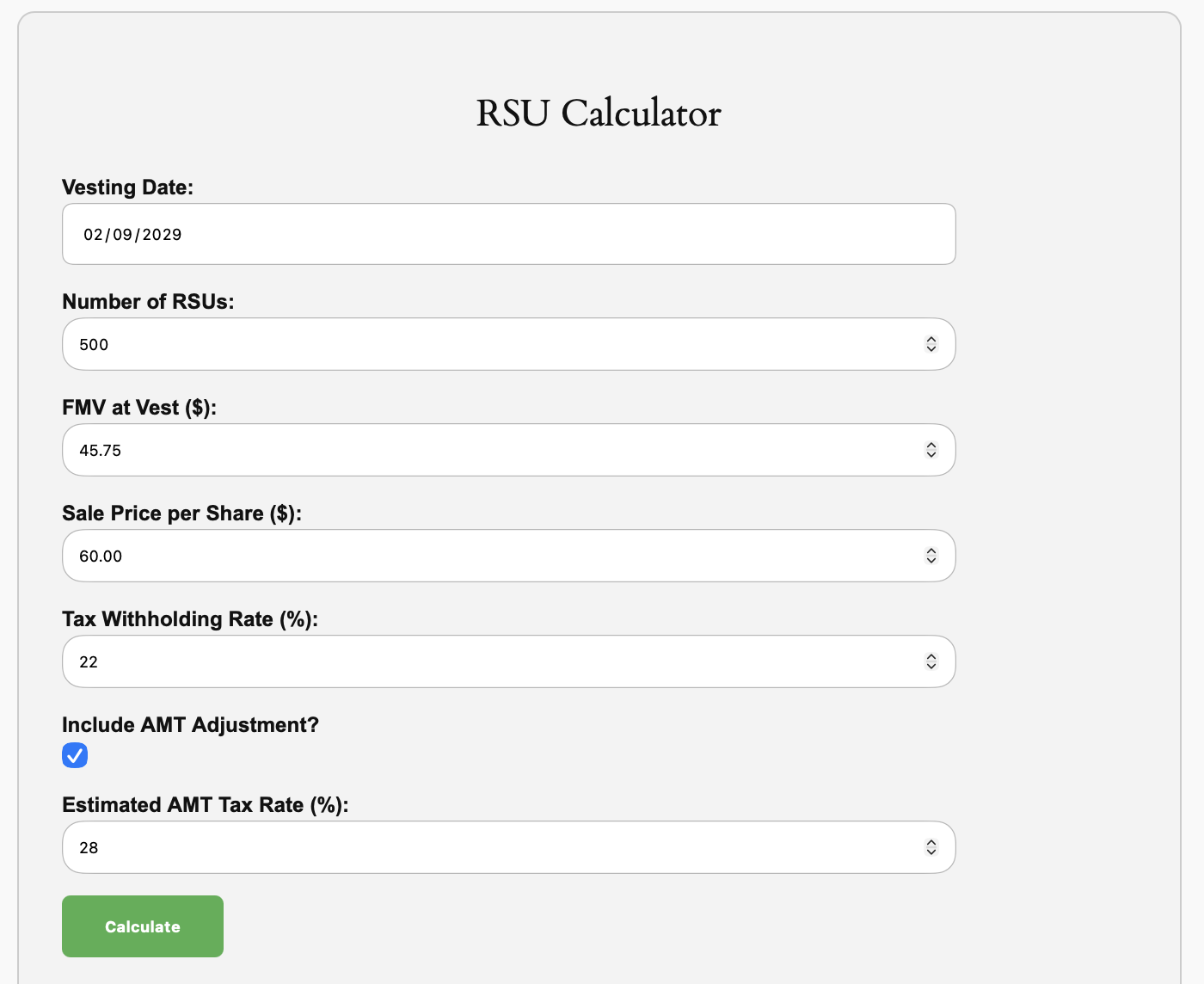
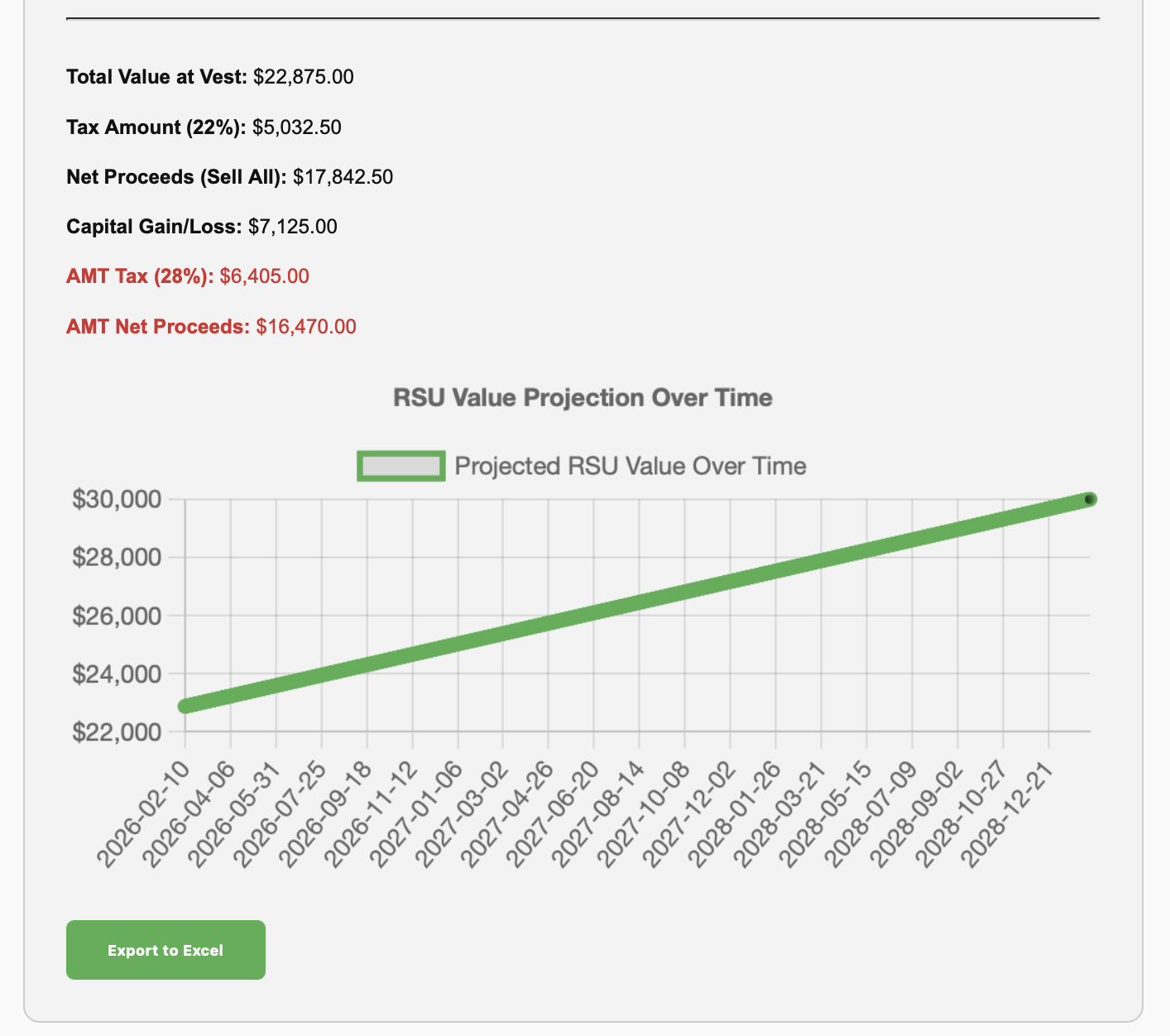
This RSU (Restricted Stock Unit) Calculator helps employees track and analyze their RSU vesting events. You can input multiple vesting dates, include sale prices to calculate capital gains or losses, toggle AMT adjustments for pre-IPO scenarios, and visualize your results in an interactive chart. This tool is to help employees to manage equity compensation and looking to understand both short- and long-term financial outcomes.
The inputs:
And the outputs:
Market Overview
Last week high flying AI related stocks had a big retreat. In fact, momentum stock loss stunned Wall Street traders (see this CNBC report). Many those stocks lost like 20% to 40%. We want to point out stocks usually approach their tops with more violent gyrations (or volatilities).
On the other hand, foreign stocks had a good week.
| Asset Class | 1W | 4W | 13W | 26W | 52W | Trend Score |
|---|---|---|---|---|---|---|
| US Stocks | -0.2% | -0.1% | 2.2% | 9.9% | 16.1% | 5.6% |
| Foreign Stocks | 2.8% | 4.8% | 11.6% | 19.8% | 37.4% | 15.3% |
| US REITs | 3.1% | 3.4% | 3.7% | 6.7% | 5.0% | 4.4% |
| Emerging Market Stocks | 2.0% | 2.8% | 6.8% | 16.7% | 31.0% | 11.9% |
| Bonds | 0.4% | 0.4% | 0.9% | 3.0% | 6.6% | 2.3% |
More detailed returns and trend scores can be found on MyPlanIQ.com Market Overview.
Upgrade to strengthen your
retirement savings while managing risk
Use our tactical asset allocation strategies in your retirement portfolio to seek stronger long-term returns while reducing exposure to frothy markets and potential economic slowdowns.
Or choose our fixed income model portfolios, which have outperformed leading bond funds for over a decade,
Or our smart factor and sector rotation portfolios that consistently beat S&P 500 stock index with less risk.
stocks and any other securities could lose money over any period of time. All investments involve risk.
Losses may exceed the principal invested. Past performance is not an indicator of future performance. There
is no guarantee for future results in your investment and any other actions based on the information
provided on the website including, but not limited to, strategies, portfolios, articles, performance data
and results of any tools. All rights are reserved and enforced. By accessing the website, you agree not to
copy and redistribute the information provided herein without the explicit consent from MyPlanIQ.