-
Pepperoni Portfolio description
Overview of the Pepperoni Portfolio About the Author: Davide Pisicchio Davide Pisicchio is a financial educator dedicated to helping individuals understand the mechanisms of financial markets. His philosophy centers on empowering people to leverage these markets to preserve and grow their wealth. Pisicchio believes that investing is essential to avoid the erosion of wealth due to inflation and other economic factors. He advocates for the use of financial markets as a tool for achieving long-term financial goals, emphasizing the importance of education and strategic planning. Portfolio Philosophy The Pepperoni Portfolio is part of a series of portfolios designed to cater to different risk appetites and life stages. Named after the bold yet balanced pizza topping, the Pepperoni Portfolio is characterized by a medium-high risk level. It is designed for investors seeking significant capital growth without exposing themselves to the extreme risks associated with more aggressive portfolios like the Diavola. The portfolio aims to potentially double capital in 7–8 years, making it suitable for those with a longer investment horizon and a tolerance for moderate risk. Asset Allocation and Holdings The Pepperoni Portfolio is composed of the following ETFs:
- VTI (50%): Vanguard Total Stock Market ETF, providing broad exposure to the U.S. equity market.
- QQQ (10%): Invesco QQQ Trust, tracking the Nasdaq-100 Index, which is heavily weighted towards technology stocks.
- IEI (30%): iShares 3-7 Year Treasury Bond ETF, offering exposure to intermediate-term U.S. Treasury bonds.
- BSV (5%): Vanguard Short-Term Bond ETF, focusing on short-term investment-grade bonds.
- CWB (5%): SPDR Bloomberg Barclays Convertible Securities ETF, investing in convertible bonds that offer a blend of equity and fixed income characteristics.
Diversification and Risk Level The Pepperoni Portfolio is well-diversified across asset classes, including U.S. equities, technology stocks, and various segments of the bond market. The allocation to VTI provides broad market exposure, while QQQ adds a growth-oriented tilt with a focus on technology. The bond ETFs (IEI, BSV, and CWB) offer stability and income, reducing overall portfolio volatility. The portfolio’s medium-high risk level is suitable for investors who are comfortable with some fluctuations in value in exchange for the potential of higher returns. Pros and Cons Pros:
- Diversified across equities and bonds, reducing risk.
- Potential for significant capital growth over the long term.
- Balanced risk level suitable for moderate risk-takers.
Cons:
- Higher risk than conservative portfolios, with potential for short-term losses.
- Heavy reliance on U.S. markets, which may limit global diversification.
- Technology sector concentration in QQQ may increase volatility.
Application for Retirement 401(k) and IRA Investors The Pepperoni Portfolio can be an excellent choice for retirement investors in 401(k) and IRA accounts, particularly for those with a longer time horizon and a moderate risk tolerance. To implement this portfolio in a 401(k) account, investors should look for funds that closely match the ETFs in the portfolio:
- VTI: Look for a total U.S. stock market index fund.
- QQQ: Seek a Nasdaq-100 index fund or a technology-focused fund.
- IEI: Choose an intermediate-term U.S. Treasury bond fund.
- BSV: Opt for a short-term bond fund.
- CWB: Find a convertible bond fund or a flexible bond fund that includes convertible securities.
Investors should review their 401(k) plan’s investment options and select funds that align with the asset allocation of the Pepperoni Portfolio. For IRA accounts, investors can directly purchase the ETFs mentioned, providing greater flexibility and control over their investments.
-
Odd-Stats Strategy description
Overview of AIM WAYS’ “ODD-STATS Strategy” Lazy Portfolio 1. Background on the Author and Portfolio Philosophy Carmine, known professionally as “AIM WAYS,” is an Italian financial coach with over 28 years of experience in asset management and consulting. Born in 1969, he transitioned from traditional financial advisory to a client-centric “Outcome-Economy” approach in 2018, emphasizing goal-based investing rather than product recommendations. His philosophy centers on long-term financial planning, risk management, and investor education, focusing on relationships and personalized strategies rather than instrument sales. The “ODD-STATS Strategy” is named in tribute to an iconic Twitter/X user, reflecting Carmine’s appreciation for unconventional yet data-driven investment insights. 2. Asset Allocation Analysis: Diversification, Risk, and Pros & Cons Asset Allocation: The portfolio is split into six ETFs, emphasizing low correlation and stability:
- QQQ (22%): Nasdaq-100 growth equities for long-term capital appreciation.
- USMV (15%): U.S. minimum volatility stocks to reduce equity risk.
- VNQ (10%): U.S. real estate (REITs) for income and inflation hedging.
- BNDX (23%): International bonds (developed markets) for diversification.
- IEF (20%): Intermediate-term U.S. Treasuries for stability.
- GLD (10%): Gold as a hedge against market downturns.
Diversification & Risk: The portfolio combines equities (growth and low-volatility), real estate, bonds (U.S. and international), and gold to mitigate correlation risks. The EUR-hedged UCITS version further reduces currency risk for European investors. Key strengths include:
- Pros: Low Ulcer Index, reduced drawdowns, inflation-aligned dividends, and resilience during market stress.
- Cons: Lower growth potential than all-equity portfolios; gold’s non-yielding nature may drag returns in bullish markets.
3. Application for Retirement Accounts (401(k) and IRA) Implementation in 401(k) Plans: Investors can replicate this strategy by mapping ETFs to their 401(k) plan’s options:
- QQQ/USMV: Use large-cap growth or low-volatility U.S. equity funds.
- VNQ: Select a REIT fund if available; otherwise, allocate to broader equities.
- BNDX/IEF: Choose international and intermediate-term bond funds.
- GLD: Most 401(k) plans lack commodity funds; substitute with equities (e.g., S&P 500) or omit.
Note: If exact matches are unavailable, prioritize the broader asset class (e.g., “U.S. Bonds” for IEF) to maintain allocation balance. IRA Flexibility: IRAs allow direct ETF purchases, enabling precise adherence to the ODD-STATS allocation. Investors can also opt for similar mutual funds (e.g., Vanguard equivalents) to minimize costs. Retirement Suitability: This portfolio suits mid-to-late-stage accumulators or retirees seeking steady returns with lower volatility. Its focus on risk-adjusted returns aligns with decumulation strategies, though younger investors may increase equity exposure for growth.
-
Dedalo Three description
Overview of the Dedalo Three Lazy Portfolio 1. Background and Philosophy About Dedalo Invest: Dedalo Invest is a financial platform that provides portfolio analysis and replication tools for investors. It offers a database of actively and passively managed funds, including ETFs, and provides free access to articles, ebooks, and analysis services (with some limitations). The platform emphasizes simplicity, cost-efficiency, and long-term investing strategies. Lazy Portfolio Philosophy: The Dedalo Three portfolio follows the “lazy portfolio” approach, which prioritizes simplicity, low costs, and broad diversification. Lazy portfolios are designed to require minimal maintenance, making them ideal for passive investors. The Dedalo Three portfolio, in its original EU version, consists of 3 ETFs, while the US version can be implemented with just 2 ETFs (VTI and VT), further simplifying the investment process. 2. Asset Allocation, Diversification, and Risk Asset Allocation: The Dedalo Three portfolio is allocated as follows:
- 70% VTI (Vanguard Total Stock Market ETF): Provides exposure to the entire U.S. stock market, covering large-, mid-, small-, and micro-cap stocks.
- 30% VT (Vanguard Total World Stock ETF): Offers global equity exposure, including both U.S. and international stocks (developed and emerging markets).
Diversification: The portfolio is highly diversified across geographies and market capitalizations. VTI covers the U.S. market, while VT adds international exposure, reducing reliance on a single economy. However, there is some overlap between VTI and VT (since VT includes U.S. stocks), which may slightly overweight U.S. equities. Risk Level: The portfolio is 100% equities, making it suitable for investors with a high risk tolerance and a long-term horizon. It lacks bonds or other defensive assets, so it may experience significant volatility during market downturns. Pros:
- Simple and easy to manage.
- Low-cost (VTI and VT have expense ratios of 0.03% and 0.07%, respectively).
- Broad diversification across U.S. and global markets.
Cons:
- No exposure to bonds or other asset classes, which may increase risk.
- Overlap between VTI and VT may lead to unintended U.S. overweighting.
3. Application for Retirement Accounts (401(k) and IRA) The Dedalo Three portfolio can be adapted for retirement accounts like 401(k)s and IRAs. Here’s how: For 401(k) Plans:
- Look for funds in your 401(k) that closely match VTI and VT. Common equivalents include:
- VTI Alternative: A U.S. total stock market index fund (e.g., FSKAX, SWTSX) or an S&P 500 index fund (e.g., FXAIX).
- VT Alternative: A global stock market index fund or a combination of U.S. and international index funds (e.g., FSGGX for international stocks).
- If exact matches aren’t available, approximate the allocation by using higher-level asset classes:
- Allocate the VTI portion to U.S. stock funds.
- Allocate the VT portion to international stock funds (developed and emerging markets).
- If your 401(k) lacks international funds, consider supplementing with an IRA that holds VT or similar ETFs.
For IRAs: Investors can directly replicate the Dedalo Three portfolio by purchasing VTI and VT in their IRA accounts, as IRAs typically offer a wider range of investment options. Note: Since many 401(k) plans lack niche asset classes like commodities, investors should allocate such portions to broader stock funds (e.g., U.S. or international equities) to maintain the portfolio’s equity-heavy focus.
-
Diavola Portfolio description
Overview of the Diavola Portfolio About the Author and Portfolio Philosophy Davide Pisicchio is a financial educator who focuses on helping individuals understand financial markets to leverage them for wealth preservation and growth. His philosophy emphasizes the importance of investing to avoid wealth erosion over time. The Diavola Portfolio reflects his belief in aggressive growth strategies, particularly for young investors with long time horizons who can tolerate high volatility. The portfolio is named after the bold “Diavola” pizza, symbolizing its high-risk, high-reward nature. Asset Allocation and Holdings Analysis The Diavola Portfolio consists of the following ETFs:
- 65% VTI (Vanguard Total Stock Market ETF) – Provides broad exposure to the entire U.S. equity market, offering diversification across large, mid, and small-cap stocks.
- 25% QQQ (Invesco QQQ Trust) – Tracks the Nasdaq-100, heavily weighted toward technology and growth stocks, adding aggressive growth potential.
- 5% BSV (Vanguard Short-Term Bond ETF) – Offers short-term bond exposure for minimal stability.
- 5% IEI (iShares 3-7 Year Treasury Bond ETF) – Provides intermediate-term Treasury exposure for slightly longer-duration fixed income.
Diversification and Risk Level The portfolio is heavily skewed toward equities (90% stocks, 10% bonds), making it highly volatile. While VTI provides broad market diversification, QQQ concentrates risk in tech and growth sectors. The small bond allocation (10%) offers minimal downside protection. This allocation is suitable for investors with a high-risk tolerance and a long-term horizon (e.g., 20+ years). Pros and Cons
- Pros: High growth potential, simplicity (only 4 ETFs), and low-cost passive management.
- Cons: Extreme volatility, lack of international diversification, and minimal bond exposure, which may not suit risk-averse investors.
Application for Retirement Accounts (401(k) and IRA) For investors looking to replicate the Diavola Portfolio in their 401(k) or IRA:
- Identify Equivalent Funds: Many 401(k) plans offer index funds similar to the ETFs in this portfolio. For example:
- VTI → Look for a “Total U.S. Stock Market Index Fund” (e.g., Fidelity ZERO Total Market Index Fund).
- QQQ → Seek a “Large-Cap Growth Fund” or “Nasdaq-100 Index Fund.”
- BSV/IEI → Use a “Short-Term Bond Fund” or “Intermediate-Term Treasury Fund.”
- Adjust for Missing Options: If a 401(k) lacks exact matches, allocate to broader asset classes:
- No QQQ alternative? Allocate more to a U.S. large-cap growth fund or S&P 500 index fund.
- No bond funds? Increase equity exposure or use a stable value fund if available.
- IRA Flexibility: IRAs typically allow direct ETF purchases, making it easier to replicate the exact allocation.
Note: Given the portfolio’s high-risk nature, younger investors (e.g., under 40) are best suited for this strategy in retirement accounts, where long-term compounding can offset short-term volatility.
-

Retirement Plan Contribution Limits in 2025
Comprehensive retirement plans (401(k), 403(b, 457(b), Solo 401(k), SEP IRA, SIMPLE IRA, IRA, Roth IRA, TSP, HSA etc.) contribution limits for 2025
-
Need to Withdraw From Your 401(k)? Follow This Order: Hardship Withdrawal, 401(k) Loan, and Penalty Withdrawal
Need to tap your 401(k) savings, follow the following order: Hardship Withdrawal, 401(k) Loan, and, as a last resort, a 401(k) withdrawal with penalties.
-
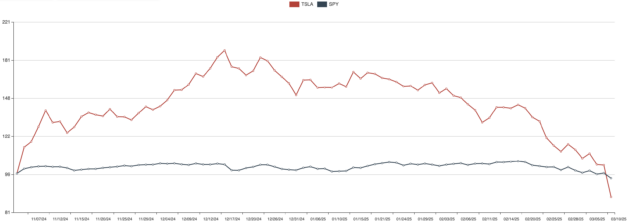
Maximize Your Cash Returns
In this issue:
- Latest in Retirement Savings & Personal Finance: Inflation Pressure and 401(k) as Rainy-Day Fund
- Maximize Your Cash Returns
- Good Funds: Capital Group ETFs
- Market Overview
-
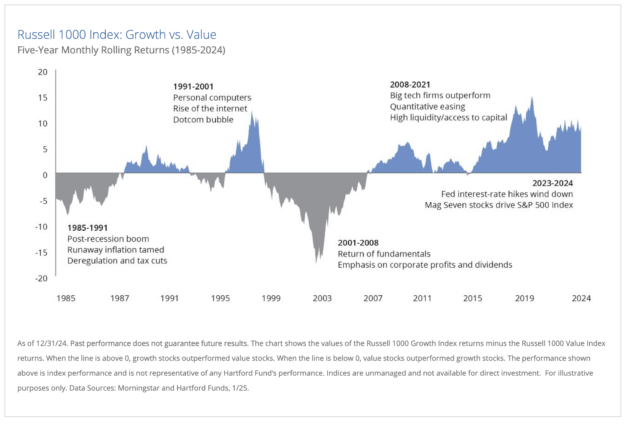
March 2025 MyPlanIQ Portfolio Update
In this issue:
- Growth vs. Value: Late Stage and Early Stage of a Bull Market
- Fund Analysis: CLO Bond Funds
- Economic & Market Indicators
- Model Portfolios
- Funds to Watch
- Market Overview
-
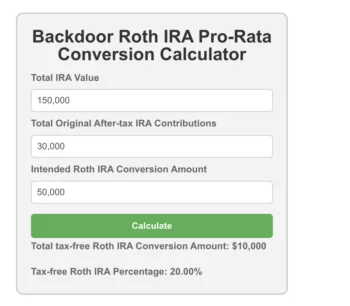
Roth IRA for Kids? SEP IRA for Rental Income?
In this issue:
- News & Tips You Can Use: 5 Tax Tips For Tax Filing Season
- 6 Ways to Cope in Your Retirement Savings & Spending Under the Current DOGE, Tariff Regime
- Backdoor Roth IRA Pro-Rata Conversion Calculator
- Market Overview
-

6 Ways to Cope in Your Retirement Savings & Spending Under the Current DOGE, Tariff Regime
In this issue:
- Latest in Retirement Savings & Personal Finance: Tax Season, Regulations Relaxed, Low Housing Affordability
- 6 Ways to Cope in Your Retirement Savings & Spending Under the Current DOGE, Tariff Regime
- 401k Early Withdrawal Cost Calculator
- Market Overview
-

Outsaving Regular Workers: How Gig Workers & Entrepreneurs Can Save 3x More for Retirement—Up to $70K Tax-Deferred!
In this issue:
- Latest in Retirement Savings & Personal Finance
- Outsaving Regular Workers: How Gig Workers & Entrepreneurs Can Save 3x More for Retirement—Up to $70K Tax-Deferred!
- Solo 401(k) Maximum Contribution Calculator
- Market Overview
-
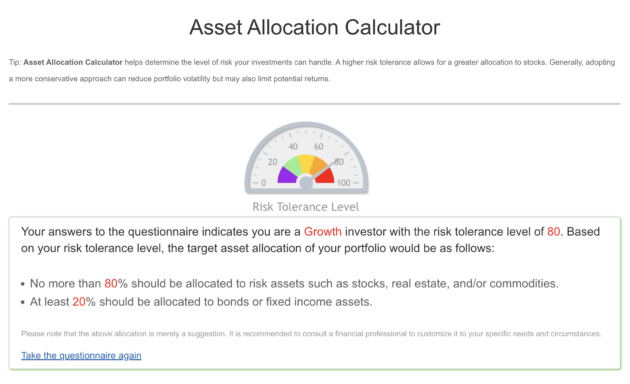
The Hidden Benefit of Emergency Savings Accounts: It’s a ‘Regular’ Savings Account with Free Employer Match
In this issue:
- Latest in Retirement Savings & Personal Finance
- One Percent Difference: Fees and Growth
- Asset Allocation Calculator
- Market Overview
-

Emergency Savings Account: A ‘Regular’ Bank Savings Account With ‘Free’ Employer Retirement Plan Match
Treating Your ESA Like a Regular Savings Account An ESA functions like a regular savings account, providing easy access to your money. Meanwhile, you earn the employer match for free.
-

Employee Stock Purchase Plan (ESPP): Concepts and Tax Explained
This article explains basic concepts in Employee Stock Purchase Program (ESPP) and discusses its tax treatment.
-
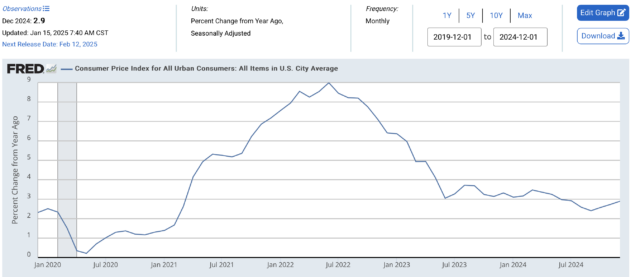
February 2025 MyPlanIQ Portfolio Update
In this issue:
- QARP: Quality at a Reasonable Price — Graham’s Framework for Defensive Investors
- Fund Analysis: QARP-style ETFs
- Economic & Market Indicators
- Model Portfolios
- Funds to Watch
- Market Overview
-
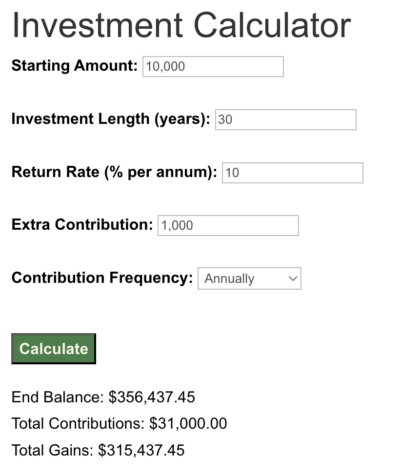
Maximizing Your Savings & Investments: The Power of 1% Over Time
In this issue:
- Latest in Retirement Savings & Personal Finance
- One Percent Difference: Fees and Growth
- Fee Calculator
- Market Overview
-

Key Retirement Ages: Essential Milestones for 401(k), IRA, Solo 401(k), SEP IRA, Social Security & Medicare
A cheat sheet for the important milestone ages such as Rule of 55, Catch-up Contributions, Medicare age,…
-
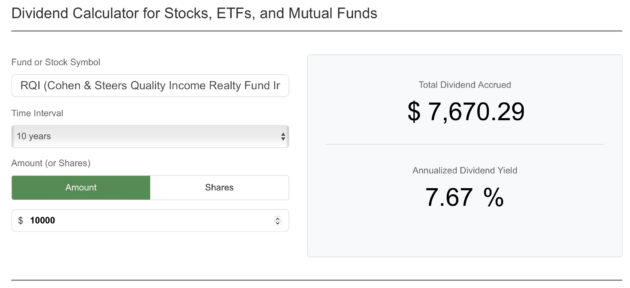
Dividend Income Investments: Benefits and Pitfalls
In this issue:
- Latest in Retirement Savings & Personal Finance
- Dividend Income Investments: Benefits and Pitfalls
- Dividend Income Calculator for Stocks, ETFs, and Mutual Funds
- Market Overview
-
CJ Verification
Impact-Site-Verification: 0ef2775c-813e-4d7a-a735-e03c3dabdbfb
-

Rule of Thumb: The 50/30/20 Budget Rule
In this issue:
- Latest in Retirement Savings & Personal Finance
- Rule of Thumb: The 50/30/20 Budget Rule
- Simple Budget Calculator
- Market Overview
