-
Warren Buffett Portfolio description
Warren Buffett Portfolio Overview 1. Background and Philosophy The Warren Buffett Portfolio is inspired by the legendary investor Warren Buffett, the chairman and CEO of Berkshire Hathaway. Known as the “Oracle of Omaha,” Buffett is one of the most successful investors of all time, advocating for long-term value investing, low-cost index funds, and simplicity in portfolio construction. His famous advice to individual investors is to invest in low-cost S&P 500 index funds, as he believes most people cannot consistently outperform the market. This lazy portfolio reflects his philosophy of keeping things simple, minimizing fees, and focusing on broad market exposure. 2. Asset Allocation, Diversification, and Risk The portfolio consists of two ETFs:
- 90% Vanguard Large-Cap ETF (VV): This ETF tracks the CRSP US Large Cap Index, providing exposure to large-cap U.S. stocks, similar to the S&P 500. It offers broad diversification across sectors and low expense ratios.
- 10% iShares 1-3 Year Treasury Bond ETF (SHY): This ETF invests in short-term U.S. Treasury bonds, providing stability and reducing overall portfolio volatility.
Diversification: The portfolio is heavily weighted toward large-cap U.S. equities, which provides exposure to established, financially stable companies. The 10% allocation to short-term Treasuries adds a conservative buffer against market downturns. Risk Level: The portfolio is moderately aggressive due to its 90% equity allocation. While large-cap stocks are less volatile than small-cap or international stocks, they still carry market risk. The 10% bond allocation slightly mitigates this risk. Pros:
- Simple and easy to manage.
- Low expense ratios due to index fund usage.
- Aligned with Warren Buffett’s proven long-term investment strategy.
Cons:
- Lack of international diversification may limit growth potential.
- Higher volatility than a more balanced portfolio (e.g., 60/40 stocks/bonds).
- Short-term bonds (SHY) offer minimal yield in low-interest-rate environments.
3. Application for Retirement Accounts (401(k) and IRA) This portfolio is well-suited for retirement investors seeking a straightforward, low-maintenance strategy. Here’s how to implement it in a 401(k) or IRA: For 401(k) Accounts:
- Vanguard Large-Cap ETF (VV): Look for a large-cap U.S. stock index fund in your 401(k) plan, such as an S&P 500 fund (e.g., Vanguard 500 Index Fund, Fidelity 500 Index Fund). If unavailable, use a total U.S. stock market fund.
- iShares 1-3 Year Treasury Bond ETF (SHY): Search for a short-term bond fund or a stable value fund in your 401(k) options. If neither is available, allocate this portion to an intermediate-term bond fund or a money market fund.
Note: If your 401(k) lacks exact matches, prioritize the broader asset class (e.g., U.S. stocks for VV, bonds for SHY). Avoid overcomplicating—simplicity is key to this strategy. For IRA Accounts: Investors can directly purchase VV and SHY in an IRA, as IRAs typically offer a wider range of investment options than 401(k) plans. This portfolio is ideal for investors who prefer a hands-off approach while adhering to Warren Buffett’s timeless principles of long-term growth and cost efficiency.
-
US Stocks description
Overview of the US Stocks Lazy Portfolio 1. Background Information and Philosophy The “US Stocks” lazy portfolio is a simple, low-cost, and highly efficient investment strategy that focuses exclusively on the U.S. stock market. This portfolio is often associated with the philosophy of passive investing, which emphasizes long-term growth through broad market exposure rather than attempting to time the market or pick individual stocks. The portfolio is designed for investors who believe in the long-term growth potential of the U.S. economy and prefer a hands-off approach to investing. The portfolio is heavily influenced by the principles of index investing, popularized by financial experts like John Bogle, the founder of Vanguard. Bogle advocated for low-cost index funds as a way to achieve market returns without the high fees and risks associated with active management. The “US Stocks” portfolio aligns with this philosophy by using a single ETF, VTI (Vanguard Total Stock Market ETF), to provide exposure to the entire U.S. stock market. 2. Asset Allocation, Diversification, Risk Level, and Pros & Cons Asset Allocation: The portfolio is 100% allocated to VTI, which tracks the performance of the CRSP US Total Market Index. This index includes large-, mid-, small-, and micro-cap stocks, providing exposure to nearly the entire U.S. equity market. Diversification: VTI offers broad diversification across sectors and market capitalizations, reducing the risk associated with individual stocks or sectors. However, since the portfolio is entirely invested in U.S. equities, it lacks exposure to international markets, bonds, or other asset classes. Risk Level: This portfolio is considered high-risk due to its 100% equity allocation. While it offers the potential for high returns, it is also susceptible to significant volatility, especially during market downturns. It is best suited for investors with a long-term investment horizon and a high risk tolerance. Pros:
- Simplicity: Easy to manage with just one ETF.
- Low Cost: VTI has a low expense ratio of 0.03%, making it cost-effective.
- Broad Market Exposure: Provides access to the entire U.S. stock market.
- Tax Efficiency: ETFs like VTI are generally tax-efficient due to their structure.
Cons:
- Lack of Diversification: No exposure to international markets or fixed income.
- High Volatility: 100% equity allocation can lead to significant fluctuations in value.
- Not Suitable for Conservative Investors: May be too risky for those nearing retirement or with low risk tolerance.
3. Application for Retirement 401(k) and IRA Investors The “US Stocks” lazy portfolio can be an excellent choice for retirement investors, particularly those with a long time horizon and a high risk tolerance. For 401(k) and IRA accounts, this portfolio can be implemented by investing in funds that closely mirror the holdings of VTI. 401(k) Implementation: Many 401(k) plans offer a U.S. Total Stock Market Index Fund as part of their investment options. Investors should look for funds with names like “Total Stock Market Index Fund” or “U.S. Equity Index Fund” that track benchmarks similar to the CRSP US Total Market Index. If such a fund is not available, investors can approximate the portfolio by combining large-cap, mid-cap, and small-cap index funds in proportions that reflect the total market. IRA Implementation: In an IRA, investors can directly purchase VTI or a similar total stock market ETF. This provides the same broad market exposure with the added flexibility of trading like a stock. For both 401(k) and IRA accounts, investors should periodically review their portfolio to ensure it aligns with their risk tolerance and retirement goals. As they approach retirement, they may consider adding bonds or other fixed-income investments to reduce volatility.
-
US Stocks Equal Weight description
Overview of the US Stocks Equal Weight Portfolio 1. Background and Philosophy The US Stocks Equal Weight Portfolio is a simple yet effective lazy portfolio designed for investors seeking broad exposure to the U.S. stock market with an equal-weight approach. This portfolio is inspired by the philosophy of passive investing, which emphasizes low-cost, diversified, and long-term investment strategies. The equal-weight methodology ensures that no single stock dominates the portfolio, reducing concentration risk and promoting a more balanced representation of the market. The portfolio is anchored by the Invesco S&P 500 Equal Weight ETF (RSP), which tracks the S&P 500 Equal Weight Index. Unlike the traditional market-cap-weighted S&P 500, the equal-weight index assigns the same weight to each of the 500 companies, providing a more democratic representation of the U.S. stock market. This approach is particularly appealing to investors who want to avoid the overconcentration in mega-cap stocks that often dominate market-cap-weighted indices. 2. Asset Allocation and Holdings The portfolio is entirely allocated to the Invesco S&P 500 Equal Weight ETF (RSP), making it a 100% U.S. equity portfolio. This allocation reflects a high-risk, high-reward profile, as equities are generally more volatile than bonds or other fixed-income investments. However, the equal-weight approach provides a unique form of diversification:
- Diversification: By equally weighting all 500 stocks in the S&P 500, the portfolio avoids the heavy reliance on a few large-cap companies that is common in market-cap-weighted indices. This reduces sector and single-stock risk, as no single company or sector can disproportionately impact the portfolio’s performance.
- Risk Level: The portfolio is considered high-risk due to its 100% equity allocation. However, the equal-weight methodology mitigates some of the risks associated with market-cap-weighted indices, such as overexposure to overvalued mega-cap stocks.
- Pros:
- Broad exposure to the U.S. stock market with reduced concentration risk.
- Potential for outperformance during periods when smaller and mid-cap stocks outperform large-cap stocks.
- Low-cost and passive management, aligning with the principles of lazy portfolios.
- Cons:
- High volatility due to 100% equity allocation, making it unsuitable for risk-averse investors.
- Underperformance during periods when large-cap stocks dominate the market.
- Lack of international or fixed-income exposure, which may limit diversification benefits.
3. Application for Retirement 401(k) and IRA Investors The US Stocks Equal Weight Portfolio can be an excellent choice for retirement investors, particularly those with a long investment horizon and a higher risk tolerance. For 401(k) and IRA accounts, this portfolio offers a straightforward, low-maintenance strategy that aligns with the principles of passive investing. For 401(k) Investors: To implement this portfolio in a 401(k) account, investors should look for an S&P 500 Equal Weight Index fund or a similar equal-weight U.S. equity fund in their plan’s investment options. Many 401(k) plans offer index funds that track the S&P 500, but equal-weight funds may be less common. If an equal-weight fund is not available, investors can approximate the strategy by combining a traditional S&P 500 index fund with a mid-cap or small-cap fund to achieve a more balanced exposure. For IRA Investors: IRA investors have more flexibility and can directly invest in the Invesco S&P 500 Equal Weight ETF (RSP) through their brokerage account. This allows for precise implementation of the portfolio without the limitations of 401(k) plan options. Overall, the US Stocks Equal Weight Portfolio is a compelling option for retirement investors seeking a simple, diversified, and low-cost strategy to build wealth over the long term. However, investors should carefully consider their risk tolerance and ensure that this high-equity allocation aligns with their overall financial goals and retirement timeline.
-
Stocks/Bonds 80/20 Momentum description
Overview of the “Stocks/Bonds 80/20 Momentum” Lazy Portfolio 1. Background and Philosophy The “Stocks/Bonds 80/20 Momentum” portfolio is a simple yet strategic lazy portfolio designed to capitalize on momentum investing while maintaining a balanced risk profile. Momentum investing is a strategy that involves buying assets that have shown an upward trend in price and selling those in a downtrend, based on the belief that assets that have performed well will continue to do so in the short to medium term. The portfolio is inspired by the broader lazy portfolio philosophy, which emphasizes minimal maintenance, low costs, and long-term investing. While the original author of this specific allocation isn’t widely documented, the approach aligns with the principles of momentum investing popularized by academics like Jegadeesh and Titman (1993) and practitioners such as AQR Capital Management. 2. Asset Allocation, Diversification, and Risk Holdings:
- 80% MTUM (iShares MSCI USA Momentum Factor ETF): This ETF tracks the performance of U.S. large- and mid-cap stocks exhibiting relatively higher momentum characteristics. Momentum stocks tend to outperform in trending markets but may underperform during reversals.
- 20% BND (Vanguard Total Bond Market ETF): This ETF provides broad exposure to U.S. investment-grade bonds, offering stability and income to counterbalance equity volatility.
Diversification: The portfolio is heavily tilted toward U.S. equities (via momentum stocks) with a modest bond allocation for downside protection. While it lacks international diversification, the momentum factor itself is a diversifier relative to traditional market-cap-weighted portfolios. Risk Level: Moderate to high. The 80% equity allocation introduces significant market risk, though the momentum factor may enhance returns during bullish trends. The 20% bond allocation mitigates some volatility but may not fully offset equity drawdowns in severe downturns. Pros:
- Potential for outperformance in trending markets due to momentum exposure.
- Low maintenance and cost-efficient (both ETFs have low expense ratios).
- Bond allocation provides some stability and income.
Cons:
- Momentum strategies can underperform during market reversals or high volatility.
- Lack of international or sector diversification increases concentration risk.
- Higher volatility than a traditional 60/40 portfolio.
3. Application for Retirement Accounts (401(k) and IRA) This portfolio can be suitable for retirement investors with a moderate to high risk tolerance and a long time horizon. Here’s how to implement it in a 401(k) or IRA: 401(k) Implementation:
- MTUM Alternative: If your 401(k) lacks a momentum-specific ETF like MTUM, look for a U.S. large-cap growth or blended equity fund (e.g., an S&P 500 index fund or a Russell 1000 Growth fund). These may partially capture momentum tendencies.
- BND Alternative: Most 401(k) plans offer a total bond market fund or intermediate-term bond fund as a substitute for BND. If not available, use a stable value fund or Treasury bond fund for the fixed-income portion.
IRA Implementation: In an IRA, investors can directly purchase MTUM and BND for precise allocation, as IRAs typically offer broader investment options than 401(k) plans. General Rule for Missing Funds: If a 401(k) lacks a specific ETF (e.g., MTUM), allocate the portion to the nearest asset class (e.g., U.S. stocks). Avoid overcomplicating with substitutes like commodities, which are often unavailable in 401(k) plans. Rebalancing: Rebalance annually or semi-annually to maintain the 80/20 allocation, adjusting contributions or exchanging funds as needed.
-
US Stocks Quality description
Overview of the US Stocks Quality Portfolio The US Stocks Quality Portfolio is a simple yet effective lazy portfolio designed for investors seeking exposure to high-quality U.S. stocks. This portfolio is entirely allocated to the iShares MSCI USA Quality Factor ETF (QUAL), which focuses on companies with strong balance sheets, stable earnings, and high profitability. The philosophy behind this portfolio is rooted in the belief that investing in high-quality companies can lead to superior long-term returns with relatively lower risk compared to the broader market. Background and Philosophy The concept of a “lazy portfolio” is based on the idea of creating a diversified, low-maintenance investment strategy that requires minimal effort to manage. The US Stocks Quality Portfolio aligns with this philosophy by concentrating on a single ETF that targets high-quality U.S. stocks. The author of this portfolio is not explicitly mentioned, but the strategy reflects principles popularized by investment experts like Warren Buffett, who emphasize investing in high-quality businesses with durable competitive advantages. Asset Allocation and Holdings The portfolio is 100% allocated to the iShares MSCI USA Quality Factor ETF (QUAL). QUAL tracks the MSCI USA Sector Neutral Quality Index, which includes U.S. companies with high return on equity (ROE), stable earnings growth, and low financial leverage. The ETF provides exposure to large- and mid-cap U.S. stocks across various sectors, ensuring diversification within the quality factor.
- Diversification: While the portfolio is concentrated in a single ETF, QUAL itself holds a diversified basket of high-quality U.S. stocks across multiple sectors, reducing sector-specific risk.
- Risk Level: The portfolio is considered moderate-risk due to its focus on high-quality companies, which tend to be more resilient during market downturns. However, it is still subject to equity market risks.
- Pros:
- Focus on high-quality companies with strong fundamentals.
- Low maintenance and easy to manage.
- Provides exposure to a diversified basket of U.S. stocks.
- Cons:
- Lack of international diversification.
- Concentration in a single ETF may limit flexibility.
- Performance is tied to the quality factor, which may underperform in certain market conditions.
Application for Retirement 401(k) and IRA Investors The US Stocks Quality Portfolio can be an excellent choice for retirement investors, particularly those with a long-term horizon and a preference for high-quality U.S. equities. For 401(k) accounts, investors can look for funds that track similar indices, such as the MSCI USA Quality Index or other quality-focused equity funds. Many 401(k) plans offer target-date funds or large-cap equity funds that may align with the quality factor. If QUAL is not available, investors can consider funds with similar objectives, such as those focusing on high ROE or low debt-to-equity ratios. For IRA accounts, investors can directly purchase QUAL or similar ETFs that emphasize quality. This portfolio is particularly suitable for investors who prefer a hands-off approach and want to benefit from the long-term growth potential of high-quality U.S. companies.
-
US Stocks Momentum description
Overview of the US Stocks Momentum Portfolio The US Stocks Momentum Portfolio is a simple, single-ETF lazy portfolio designed to capture the momentum factor in the U.S. stock market. Momentum investing is a strategy that focuses on buying stocks that have shown an upward trend in price and selling those that have shown a downward trend. This portfolio is built around the iShares MSCI USA Momentum Factor ETF (MTUM), which tracks the performance of U.S. large- and mid-cap stocks exhibiting relatively higher momentum characteristics. 1. Background and Philosophy The momentum factor is one of the most well-documented anomalies in finance, supported by academic research, including the work of Eugene Fama and Kenneth French. The philosophy behind this portfolio is rooted in the belief that stocks that have performed well in the recent past are likely to continue performing well in the near future. This strategy is often favored by investors who believe in the persistence of trends and are willing to take on higher risk for potentially higher returns. The author of this portfolio is not explicitly mentioned, but the strategy aligns with the principles of factor-based investing, which has gained popularity among both individual and institutional investors. The simplicity of the portfolio makes it an attractive option for lazy investors who prefer a hands-off approach while still targeting a specific investment factor. 2. Asset Allocation and Holdings The portfolio is entirely allocated to the iShares MSCI USA Momentum Factor ETF (MTUM), which provides exposure to U.S. large- and mid-cap stocks with strong momentum characteristics. This ETF is designed to overweight stocks that have outperformed in the recent past, making it a concentrated bet on the momentum factor.
- Diversification: While the portfolio is highly concentrated in terms of its focus on the momentum factor, the underlying ETF holds a diversified basket of U.S. stocks across various sectors. However, it lacks exposure to international markets, bonds, or other asset classes, which may limit diversification.
- Risk Level: Momentum investing can be volatile, as it relies on the continuation of trends that may reverse unexpectedly. The portfolio is considered high-risk due to its concentrated exposure to a single factor and the inherent volatility of momentum stocks.
- Pros: The portfolio is simple to manage, cost-effective (due to the low expense ratio of MTUM), and has the potential for high returns during periods when momentum is a dominant factor in the market.
- Cons: The lack of diversification across factors, asset classes, and geographies increases the risk of significant drawdowns during market reversals. Additionally, momentum strategies can underperform during periods of market turbulence or when trends reverse.
3. Application for Retirement 401(k) and IRA Investors The US Stocks Momentum Portfolio can be a suitable option for retirement investors with a high risk tolerance and a long investment horizon. For those looking to incorporate this strategy into their 401(k) or IRA accounts, the following steps can be taken:
- 401(k) Accounts: Investors should review their plan’s investment options to identify funds that track momentum-based indices or provide exposure to U.S. large- and mid-cap stocks with momentum characteristics. If MTUM or a similar ETF is not available, investors can look for actively managed funds that focus on momentum strategies or use a combination of growth-oriented funds to approximate the portfolio.
- IRA Accounts: Investors have more flexibility in IRAs and can directly purchase the MTUM ETF through their brokerage account. This allows for precise implementation of the portfolio without the constraints of 401(k) plan options.
For investors who prefer a more diversified approach, this portfolio can be combined with other factor-based or broad-market ETFs to reduce risk and enhance diversification. However, it is important to regularly review the portfolio’s performance and adjust allocations as needed to align with long-term retirement goals.
-
Technology description
Overview of the Technology Lazy Portfolio 1. Background Information and Philosophy The “Technology” lazy portfolio is a highly concentrated investment strategy that focuses exclusively on the technology sector. This portfolio is designed for investors who have a strong conviction in the growth potential of technology companies and are willing to accept higher volatility in exchange for potentially higher returns. The portfolio’s philosophy is rooted in the belief that technology will continue to drive innovation and economic growth, making it a cornerstone of long-term investment strategies. While the author of this specific portfolio is not explicitly mentioned, the approach aligns with the broader trend of sector-specific investing, where investors allocate a significant portion of their portfolio to a single sector they believe will outperform the broader market. This strategy is often favored by those who have a deep understanding of the technology sector and are comfortable with its inherent risks. 2. Asset Allocation and Holdings The portfolio is entirely allocated to the Invesco QQQ Trust (QQQ), which tracks the Nasdaq-100 Index. This index is composed of 100 of the largest non-financial companies listed on the Nasdaq stock exchange, with a heavy emphasis on technology giants such as Apple, Microsoft, Amazon, and Alphabet (Google).
- Diversification: The portfolio lacks diversification as it is 100% invested in the technology sector. While QQQ itself holds a basket of 100 stocks, the concentration in technology means that the portfolio is highly exposed to sector-specific risks. This lack of diversification can lead to significant volatility, especially during periods of market downturns or sector-specific challenges.
- Risk Level: The portfolio is considered high-risk due to its concentrated exposure to the technology sector. Technology stocks are known for their high growth potential but also for their susceptibility to rapid price swings, regulatory changes, and shifts in consumer preferences. Investors in this portfolio should be prepared for significant fluctuations in value.
- Pros:
- High growth potential: The technology sector has historically delivered strong returns, driven by innovation and rapid adoption of new technologies.
- Simplicity: The portfolio is easy to manage with just one ETF, making it a straightforward investment for those who prefer a hands-off approach.
- Cons:
- Lack of diversification: The portfolio is heavily concentrated in one sector, increasing the risk of significant losses if the technology sector underperforms.
- High volatility: Technology stocks can experience sharp price swings, which may not be suitable for risk-averse investors.
3. Application for Retirement 401(k) and IRA Investors For retirement investors, the Technology lazy portfolio could be a suitable option for those who have a long investment horizon and a high risk tolerance. Younger investors, in particular, may benefit from the growth potential of the technology sector, as they have more time to recover from potential downturns. In a 401(k) account, investors can look for funds that track the Nasdaq-100 Index or similar technology-focused indices. Many 401(k) plans offer target-date funds or sector-specific funds that include exposure to technology stocks. If a direct equivalent to QQQ is not available, investors can consider funds that invest in large-cap growth stocks or technology-focused mutual funds. For IRA accounts, investors have more flexibility and can directly purchase QQQ or similar ETFs. This allows for precise control over the portfolio’s allocation and the ability to rebalance as needed. However, it’s important for investors to regularly review their portfolio and ensure that their overall asset allocation aligns with their retirement goals and risk tolerance. In summary, the Technology lazy portfolio is a high-risk, high-reward strategy that may appeal to investors with a strong belief in the future of the technology sector. However, due to its concentrated nature, it should be approached with caution, especially by those nearing retirement or with a lower risk tolerance.
-
The Right Way to Withdraw from Your 401(k) Without Regret
In this issue:
- Latest in Retirement Savings & Personal Finance: $1.5 Million’s Retirement Mileage Across Various States, Therapy Needed in Market Turmoil
- The Right Way to Withdraw from Your 401(k) Without Regret
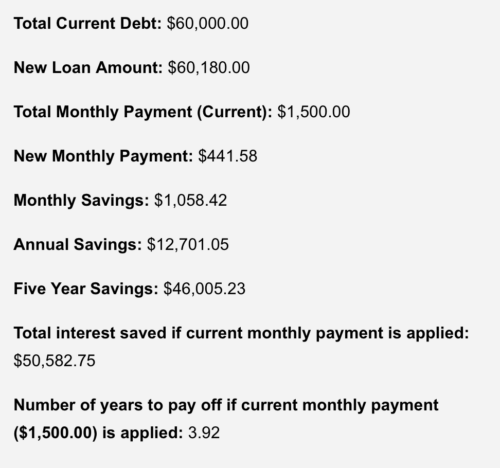
- Credit Card Debt Consolidation Calculator
- Market Overview
-
Margherita Portfolio description
About the Author and Portfolio Philosophy Davide Pisicchio is a financial educator dedicated to helping individuals understand the mechanisms of financial markets and leverage them to their advantage. His philosophy centers on the belief that everyone should invest to preserve and grow their wealth. He emphasizes that financial markets, when used properly, are the best tool to achieve this goal. Pisicchio’s approach is rooted in simplicity, stability, and long-term growth, which is reflected in the design of his portfolios, including the Margherita Portfolio. The Margherita Portfolio is part of a series of portfolios designed to cater to different risk appetites and life stages. It is the least risky among the portfolios, making it ideal for conservative investors who prioritize stability and capital protection. The portfolio’s name, inspired by the classic Margherita pizza, symbolizes its simplicity and reliability. Asset Allocation and Holdings Analysis The Margherita Portfolio is composed of the following ETFs:
- VTI (30%): Vanguard Total Stock Market ETF provides broad exposure to the U.S. equity market, offering diversification across large-, mid-, and small-cap stocks.
- IEI (40%): iShares 3-7 Year Treasury Bond ETF focuses on intermediate-term U.S. Treasury bonds, providing stability and income with lower interest rate risk compared to long-term bonds.
- BSV (5%): Vanguard Short-Term Bond ETF invests in short-term investment-grade bonds, offering low volatility and capital preservation.
- CWB (5%): SPDR Bloomberg Convertible Securities ETF provides exposure to convertible bonds, which offer a mix of equity and fixed-income characteristics.
- TIP (5%): iShares TIPS Bond ETF invests in Treasury Inflation-Protected Securities, offering protection against inflation.
- LQD (5%): iShares iBoxx $ Investment Grade Corporate Bond ETF focuses on high-quality corporate bonds, providing income with moderate risk.
- GLD (10%): SPDR Gold Shares ETF offers exposure to gold, serving as a hedge against market volatility and inflation.
Diversification: The portfolio is well-diversified across asset classes, including equities, bonds, and gold. This diversification helps reduce overall risk while providing exposure to different market segments. Risk Level: The Margherita Portfolio is designed for conservative investors. With 60% allocated to bonds and 10% to gold, it emphasizes capital preservation and stability. The 30% allocation to equities provides growth potential without excessive risk. Pros:
- Low risk and high stability, making it suitable for risk-averse investors.
- Diversified across asset classes to mitigate market volatility.
- Inflation protection through TIP and GLD holdings.
- Potential to double capital in 13 years, based on historical performance.
Cons:
- Lower growth potential compared to more aggressive portfolios.
- Heavy reliance on bonds may underperform in rising interest rate environments.
- Gold allocation may not always provide consistent returns.
Application for Retirement 401(k) and IRA Investors The Margherita Portfolio is an excellent choice for retirement investors, particularly those in or nearing retirement who prioritize capital preservation and steady growth. Here’s how it can be applied to 401(k) and IRA accounts: 401(k) Accounts: Many 401(k) plans offer target-date funds or index funds that closely mirror the ETFs in the Margherita Portfolio. For example:
- VTI: Look for a total U.S. stock market index fund.
- IEI and BSV: Seek intermediate-term and short-term bond funds, respectively.
- CWB and LQD: Consider corporate bond or convertible bond funds if available.
- TIP: Look for an inflation-protected bond fund.
- GLD: Some plans offer commodity or gold-focused funds as alternatives.
If exact matches are unavailable, investors can approximate the portfolio using similar funds with comparable risk and return profiles. IRA Accounts: IRAs offer greater flexibility, allowing investors to directly purchase the ETFs listed in the Margherita Portfolio. This makes it easier to replicate the portfolio’s allocation and maintain its low-risk, diversified structure. By aligning the Margherita Portfolio with their retirement accounts, investors can achieve a balanced, low-risk strategy that supports long-term financial security.
-
PISI Portfolio description
Overview of the PISI Portfolio About the Author Davide Pisicchio is a financial educator with a mission to empower individuals by helping them understand the mechanisms of financial markets. His philosophy revolves around the idea that everyone should invest to preserve and grow their wealth. Pisicchio believes that financial markets, when used correctly, are the most effective tool to achieve long-term financial security. His approach emphasizes simplicity, innovation, and risk management, which is reflected in the design of the PISI Portfolio. Portfolio Philosophy The PISI Portfolio (Portfolio of Investments Simple and Innovative) is designed to provide protection against inflation while minimizing risk and volatility over the long term. This portfolio is ideal for investors who prioritize capital preservation and steady growth, particularly in uncertain economic environments. By combining equities, bonds, and gold, the portfolio aims to balance growth potential with downside protection. Asset Allocation and Holdings The PISI Portfolio is composed of the following asset allocation:
- 30% VTI (Vanguard Total Stock Market ETF): Provides broad exposure to the U.S. equity market, offering growth potential through diversification across large-, mid-, and small-cap stocks.
- 50% IEF (iShares 7-10 Year Treasury Bond ETF): Focuses on intermediate-term U.S. Treasury bonds, which provide stability and income while reducing overall portfolio volatility.
- 10% LQD (iShares iBoxx $ Investment Grade Corporate Bond ETF): Adds exposure to high-quality corporate bonds, offering higher yields than Treasuries with moderate risk.
- 10% GLD (SPDR Gold Shares): Provides a hedge against inflation and market uncertainty, as gold tends to perform well during periods of economic instability.
Diversification and Risk Level The PISI Portfolio is well-diversified across asset classes, including equities, bonds, and gold. This diversification helps mitigate risk by reducing the impact of any single asset class’s poor performance. The portfolio’s heavy allocation to bonds (60%) makes it relatively conservative, with lower volatility compared to equity-heavy portfolios. However, the inclusion of equities and gold provides growth potential and inflation protection, respectively. Pros and Cons Pros:
- Strong focus on capital preservation and inflation protection.
- Low volatility due to a significant allocation to bonds.
- Diversification across asset classes reduces risk.
- Simple and easy to manage, making it suitable for long-term investors.
Cons:
- Lower growth potential compared to equity-heavy portfolios.
- Gold’s performance can be unpredictable and may underperform during bull markets.
- Bond-heavy allocation may underperform in rising interest rate environments.
Application for Retirement Accounts (401(k) and IRA) The PISI Portfolio is well-suited for retirement investors seeking a balanced and conservative approach to growing their savings while minimizing risk. For 401(k) and IRA accounts, investors can replicate this portfolio by selecting funds that closely match the ETFs in the allocation:
- VTI: Look for a total U.S. stock market index fund in your 401(k) plan, such as a fund tracking the CRSP US Total Market Index or the S&P 500 Index.
- IEF: Choose an intermediate-term Treasury bond fund or a broad bond index fund that includes U.S. Treasuries.
- LQD: Select an investment-grade corporate bond fund or a diversified bond fund with exposure to corporate bonds.
- GLD: If your 401(k) plan does not offer a gold ETF, consider allocating to a precious metals fund or a commodity fund that includes gold exposure. Alternatively, IRA investors can directly purchase GLD or similar gold ETFs.
Investors should review their plan’s investment options and consult with a financial advisor if necessary to ensure the selected funds align with the PISI Portfolio’s strategy.
-
Ulcer Free Strategy description
Overview of the “Ulcer-Free Strategy” Lazy Portfolio About the Author and Portfolio Philosophy The author, Carmine, also known as “AIM WAYS,” is an Italian financial coach with over 28 years of experience in personal finance and investment consulting. Born in 1969, Carmine spent the first 15 years of his career as a tied-agent for a leading Italian asset management company before transitioning to a more client-focused, outcome-driven approach. In 2018, he embraced the concept of financial coaching, emphasizing the “Outcome-Economy” model, which prioritizes investor value and long-term financial goals over traditional product placement. His philosophy centers on “Goal-Based Investing,” where the focus is on understanding the investor’s needs, risk tolerance, and time horizon, rather than recommending specific financial instruments. The “Ulcer-Free Strategy” reflects Carmine’s commitment to minimizing emotional stress and financial risk for investors. The portfolio incorporates the “Ulcer-Index,” a metric that measures the emotional pain caused by asset price swings. This strategy is designed for investors with low risk tolerance, aiming to protect their savings from significant declines while achieving stable returns. Asset Allocation and Holdings Analysis The “Ulcer-Free Strategy” is a well-diversified portfolio that balances stability, income generation, inflation protection, and equity appreciation. Its asset allocation is as follows:
- 11% US Large-Cap Growth (QQQ): This allocation provides exposure to high-growth potential companies in the US, offering equity appreciation. However, it also introduces some volatility, as growth stocks can be sensitive to market fluctuations.
- 34% International All-Term Bonds (BNDX): This allocation diversifies credit risk across developed markets, providing stability and income through government debt. It reduces portfolio risk by mitigating exposure to a single country’s economic conditions.
- 28% US Intermediate Bonds 7-10 Years (IEF): These bonds offer stability and income with lower risk compared to short-term or high-yield bonds. They act as a defensive component in the portfolio.
- 15% Bloomberg US Convertible Securities (CWB): Convertible bonds combine fixed income with equity appreciation potential, offering lower volatility than pure equities. This allocation adds a hybrid element to the portfolio.
- 12% Gold Commodity (GLD): Gold serves as a hedge against inflation and economic turbulence, reducing maximum drawdowns and acting as a safe-haven asset.
Pros:
- Low risk profile, suitable for conservative investors.
- Diversification across asset classes and geographies reduces overall portfolio risk.
- Inflation protection through gold and bonds.
- Emphasis on minimizing emotional stress aligns with long-term investment goals.
Cons:
- Lower equity exposure may limit growth potential during bull markets.
- Gold and bonds may underperform in low-inflation or high-interest-rate environments.
- Convertible securities, while less volatile, may still carry some equity risk.
Application for Retirement 401(k) and IRA Investors The “Ulcer-Free Strategy” is well-suited for retirement investors, particularly those nearing retirement or with low risk tolerance. For 401(k) and IRA accounts, investors can replicate this portfolio by selecting corresponding funds from their plan’s investment options. Here’s how:
- US Large-Cap Growth (QQQ): Look for a large-cap growth index fund or ETF in your 401(k) plan, such as those tracking the Nasdaq-100 or S&P 500 Growth Index.
- International All-Term Bonds (BNDX): Choose an international bond fund or ETF that invests in developed markets’ government debt.
- US Intermediate Bonds 7-10 Years (IEF): Select an intermediate-term bond fund or ETF that focuses on US Treasury or investment-grade corporate bonds.
- Bloomberg US Convertible Securities (CWB): Opt for a convertible bond fund or ETF if available, or consider a balanced fund that includes convertible securities.
- Gold Commodity (GLD): If your plan does not offer a gold ETF, consider a precious metals fund or a commodity-focused fund that includes gold exposure.
Investors should consult their plan’s investment menu and, if necessary, work with a financial advisor to identify the closest matching funds. This portfolio’s conservative nature makes it an excellent choice for preserving capital and generating steady income during retirement.
-
Aim comfortable trip description
Overview of the “Aim Comfortable Trip” Lazy Portfolio About the Author and Portfolio Philosophy The author, Carmine, known as “AIM WAYS,” is an Italian financial professional with over 30 years of experience in asset management and financial consulting. Born in 1969, Carmine transitioned from a traditional tied-agent role to a more holistic financial coaching approach in 2018. His philosophy revolves around the “Outcome-Economy,” which emphasizes building relationships and focusing on investor goals rather than merely recommending financial instruments. This approach aligns with the principles of “Goal-Based Investing,” where the investor is empowered to make informed decisions based on their financial “therapy” plan. The “Aim Comfortable Trip” portfolio reflects Carmine’s commitment to creating a stable and comforting financial journey for investors. It is designed to minimize market volatility while delivering consistent returns over the long term, ensuring that investors feel secure throughout their investment lifecycle. Asset Allocation and Holdings Analysis The portfolio is well-diversified across asset classes, geographies, and risk levels, making it suitable for conservative to moderate-risk investors. Here’s a breakdown of its composition:
- 13% EAFE (EFV): Exposure to international developed markets (ex-US) with a focus on undervalued large-cap stocks. This adds geographic diversification and value-oriented growth potential.
- 11% Large-Cap Tech (QQQ): Focused on high-growth technology companies listed on the Nasdaq. This provides growth potential but introduces some volatility.
- 10% S&P 600 Small-Cap (IJS): Exposure to small-cap US companies with a value focus. This adds diversification and potential for higher returns but comes with higher risk.
- 6% Minimum Volatility (USMV): US large-cap companies with low volatility. This helps reduce overall portfolio risk and smooth returns.
- 28% International Developed Markets Bond (BNDX): A significant allocation to international bonds, providing credit risk diversification and stability.
- 17% Short-Term Bond Market (BSV): Short-term US bonds, which are less sensitive to interest rate changes, offering stability and income.
- 15% Gold Trust Commodity (GLD): A “safe haven” asset to hedge against inflation, economic downturns, and market volatility.
Pros:
- Strong diversification across asset classes and geographies.
- Low volatility due to significant bond and gold allocations.
- Potential for steady returns above inflation over the long term.
- Alignment with a conservative to moderate risk profile.
Cons:
- Limited exposure to emerging markets, which could reduce growth potential.
- Higher allocation to bonds may underperform in rising interest rate environments.
- Gold allocation, while defensive, may not generate significant returns in stable markets.
Application for Retirement 401(k) and IRA Investors The “Aim Comfortable Trip” portfolio is well-suited for retirement investors seeking a balanced and low-volatility approach. For 401(k) and IRA accounts, investors can replicate this portfolio by selecting corresponding funds from their plan’s investment options. Here’s how:
- EAFE (EFV): Look for international developed market index funds or ETFs in your plan.
- Large-Cap Tech (QQQ): Choose a Nasdaq-100 index fund or technology sector fund.
- S&P 600 Small-Cap (IJS): Select a small-cap value index fund or ETF.
- Minimum Volatility (USMV): Opt for a low-volatility or defensive equity fund.
- International Developed Markets Bond (BNDX): Choose an international bond fund or ETF.
- Short-Term Bond Market (BSV): Select a short-term bond fund or ETF.
- Gold Trust Commodity (GLD): Look for a gold or precious metals fund, if available.
Investors should review their plan’s fund options and expense ratios to ensure alignment with the portfolio’s strategy. For IRAs, ETFs like EFV, QQQ, IJS, USMV, BNDX, BSV, and GLD can be directly purchased through brokerage accounts. This portfolio is particularly appealing for retirees or near-retirees who prioritize capital preservation and steady income while maintaining some growth potential. Its balanced approach helps mitigate market risks, making it a reliable choice for long-term retirement planning.
-
Four Seasons Portfolio description
Overview of the Four Seasons Portfolio About the Author: Davide Pisicchio is a financial educator with a mission to empower individuals by demystifying the complexities of financial markets. His philosophy centers on the belief that investing is essential for wealth preservation and growth. Pisicchio emphasizes that financial markets, when understood and utilized correctly, are powerful tools for achieving long-term financial goals. His approach is rooted in education, simplicity, and strategic diversification, making investing accessible to everyone, regardless of their financial background. Portfolio Philosophy The Four Seasons portfolio is part of a series of portfolios designed to cater to different risk appetites and life stages. It is positioned as the second-to-last in terms of risk, making it a balanced and stable option for investors seeking steady growth with controlled risk. The portfolio is inspired by the concept of diversification across asset classes, ensuring that it can weather various market conditions, much like the four seasons. It is ideal for conservative to moderate investors who prioritize capital preservation while still aiming for growth over the long term. Asset Allocation and Holdings The Four Seasons portfolio is well-diversified across equities, bonds, and alternative assets, as reflected in its allocation:
- 40% VTI (Vanguard Total Stock Market ETF): Provides broad exposure to the U.S. equity market, offering growth potential through large-, mid-, and small-cap stocks.
- 30% IEI (iShares 3-7 Year Treasury Bond ETF): Focuses on intermediate-term U.S. Treasury bonds, providing stability and income with lower interest rate risk compared to long-term bonds.
- 5% BSV (Vanguard Short-Term Bond ETF): Adds short-term bond exposure, further reducing portfolio volatility and providing liquidity.
- 5% CWB (SPDR Bloomberg Convertible Securities ETF): Offers exposure to convertible bonds, which combine features of both bonds and equities, providing a balance of income and growth potential.
- 5% TIP (iShares TIPS Bond ETF): Invests in Treasury Inflation-Protected Securities, offering protection against inflation while maintaining bond stability.
- 5% LQD (iShares iBoxx $ Investment Grade Corporate Bond ETF): Provides exposure to high-quality corporate bonds, enhancing income potential with moderate risk.
- 10% GLD (SPDR Gold Shares): Adds a hedge against market volatility and inflation through gold, a traditional safe-haven asset.
Diversification and Risk Level: The portfolio is highly diversified across asset classes, sectors, and geographies, reducing overall risk. Its allocation to bonds and gold provides stability, while equities offer growth potential. The risk level is moderate, making it suitable for investors with a medium-term to long-term horizon who seek a balance between growth and capital preservation. Pros:
- Balanced risk-return profile, suitable for conservative to moderate investors.
- Diversification across equities, bonds, and gold reduces volatility and enhances resilience.
- Inflation protection through TIP and GLD holdings.
- Potential to double capital in approximately 11 years, assuming historical returns.
Cons:
- Lower equity allocation may limit growth potential during strong bull markets.
- Gold and bond holdings may underperform in low-inflation or rising interest rate environments.
- Requires periodic rebalancing to maintain target allocations.
Application for Retirement 401(k) and IRA Investors The Four Seasons portfolio is an excellent choice for retirement investors seeking a balanced and diversified approach to growing their savings. For 401(k) and IRA accounts, investors can replicate this portfolio by selecting funds that closely match the ETFs or index funds in the allocation. Here’s how:
- VTI: Look for a total U.S. stock market index fund in your 401(k) plan, such as Fidelity’s FSKAX or Schwab’s SWTSX.
- IEI: Choose an intermediate-term Treasury bond fund, such as Fidelity’s FUAMX or Vanguard’s VSIGX.
- BSV: Opt for a short-term bond fund, such as Vanguard’s VBIRX or Fidelity’s FSBAX.
- CWB: If convertible securities funds are unavailable, consider a balanced fund or a corporate bond fund as an alternative.
- TIP: Select a TIPS fund, such as Vanguard’s VTAPX or Fidelity’s FIPDX.
- LQD: Choose an investment-grade corporate bond fund, such as Vanguard’s VICSX or Fidelity’s FGOVX.
- GLD: If gold funds are unavailable, consider a precious metals or commodities fund as a substitute.
Investors should review their 401(k) plan’s investment options and consult with a financial advisor if needed to ensure the selected funds align with the portfolio’s strategy. For IRAs, where investment choices are more flexible, the exact ETFs can be purchased directly. By adopting the Four Seasons portfolio, retirement investors can achieve a well-diversified, balanced approach to growing their savings while managing risk effectively.
-
In Saecula Saeculorum description
Overview of the “In Saecula Saeculorum” Lazy Portfolio 1. Background on the Author and Portfolio Philosophy The author, Fulvio Marchese, is an Italian financial expert with 50 years of experience in banking, specializing in wealth management for institutional and individual investors. Based in Sanremo, Italy, near Monaco-Montecarlo, his career has been guided by the principle of “uncompromising quality,” blending experience with innovation. His approach emphasizes long-term success through disciplined risk management and avoiding mistakes rather than predicting market trends. Today, he serves as a life coach, helping individuals make strategic financial and life decisions. His philosophy aligns with the “In Saecula Saeculorum” (Latin for “forever”) portfolio, which reflects a commitment to enduring, generational wealth preservation. 2. Asset Allocation Analysis: Diversification, Risk, and Pros & Cons Diversification: The portfolio is well-diversified across asset classes:
- 45% VTI (Total US Stock Market): Provides broad exposure to U.S. equities, capturing large-, mid-, and small-cap stocks.
- 20% IEF (US Intermediate-Term Bonds): Offers stability and income with moderate interest rate risk.
- 15% LQD (Investment-Grade Corporate Bonds): Enhances yield while maintaining credit quality.
- 10% SHY (Short-Term Treasury Bonds): Adds liquidity and safety.
- 10% GLD (Gold Commodity): Acts as a hedge against inflation and market volatility.
Risk Level: Moderate. The 65% equity allocation introduces market risk, while the 35% fixed-income and gold allocation mitigates volatility. Gold further diversifies against economic uncertainty. Pros:
- Balanced exposure to growth (stocks) and stability (bonds/gold).
- Low-cost ETFs ensure efficiency.
- Gold provides a non-correlated asset for downside protection.
Cons:
- Limited international diversification (U.S.-centric).
- Gold’s performance can be erratic and non-yielding.
- Intermediate-term bonds may underperform in rising rate environments.
3. Application for Retirement Accounts (401(k) and IRA) This portfolio is suitable for retirement investors seeking a balanced, long-term strategy. Here’s how to implement it in a 401(k) or IRA: Step 1: Match ETFs to 401(k) Fund Options Many 401(k) plans may not offer the exact ETFs, but similar index funds are often available:
- VTI (Total US Stock Market): Look for a “U.S. Total Stock Market Index Fund” or an S&P 500 fund as a substitute.
- IEF (Intermediate-Term Bonds): Use a “U.S. Aggregate Bond Index Fund” or intermediate-term Treasury fund.
- LQD (Corporate Bonds): Opt for a “Corporate Bond Fund” or a broader bond index fund.
- SHY (Short-Term Treasuries): Substitute with a “Short-Term Bond Fund” or money market fund for stability.
- GLD (Gold): Most 401(k) plans lack commodity funds. Allocate this portion to equities (e.g., U.S. or international stocks) or omit it.
Step 2: Adjust for Missing Asset Classes If a 401(k) lacks specific options (e.g., gold or corporate bonds), reallocate to the nearest available asset class (e.g., stocks for gold, broader bonds for LQD). Maintain the overall equity/fixed-income balance. Step 3: Rebalance Annually Regularly review and rebalance to maintain target allocations, especially after market shifts. Note: For IRAs, where investment options are flexible, the exact ETFs can be purchased directly.
-
Capricciosa Portfolio description
Overview of the Capricciosa Portfolio by Davide Pisicchio Author Background and Portfolio Philosophy Davide Pisicchio is a financial educator who focuses on helping individuals understand financial markets to make informed investment decisions. His philosophy centers on the idea that investing is essential to preserving and growing wealth over time. The Capricciosa Portfolio is part of a series of portfolios designed to suit different risk appetites and life stages. Positioned as a balanced option, it aims to provide a mix of security and growth, making it suitable for investors who want moderate exposure to equities while maintaining downside protection. Asset Allocation and Holdings Analysis The Capricciosa Portfolio consists of the following ETFs:
- 50% VTI (Vanguard Total Stock Market ETF) – Provides broad exposure to the U.S. equity market.
- 30% IEI (iShares 3-7 Year Treasury Bond ETF) – Offers intermediate-term U.S. Treasury exposure for stability.
- 5% BSV (Vanguard Short-Term Bond ETF) – Adds short-term bond exposure for liquidity and lower volatility.
- 5% CWB (SPDR Bloomberg Barclays Convertible Securities ETF) – Introduces convertible bonds for hybrid equity-bond exposure.
- 5% LQD (iShares iBoxx $ Investment Grade Corporate Bond ETF) – Adds corporate bond exposure for yield enhancement.
- 5% GLD (SPDR Gold Shares) – Provides a hedge against inflation and market downturns.
Diversification and Risk Level This portfolio is well-diversified across U.S. equities (VTI), government bonds (IEI, BSV), corporate bonds (LQD), convertible securities (CWB), and gold (GLD). The 50% equity allocation provides growth potential, while the 50% fixed-income and gold allocation reduces volatility. The inclusion of gold (GLD) adds a non-correlated asset, improving diversification. Pros and Cons Pros:
- Balanced risk-return profile suitable for moderate investors.
- Diversified across asset classes, reducing concentration risk.
- Gold allocation provides inflation and crisis hedging.
Cons:
- Lower equity exposure may limit long-term growth compared to aggressive portfolios.
- Gold (GLD) can be volatile and may underperform in strong bull markets.
- Convertible bonds (CWB) may introduce complexity for some investors.
Application for Retirement Accounts (401(k) and IRA) Investors can implement the Capricciosa Portfolio in their 401(k) or IRA accounts by selecting equivalent funds available in their plan. Many 401(k) plans may not offer the exact ETFs listed, but investors can approximate the allocation as follows:
- VTI (U.S. Stocks) → Use a total U.S. stock market index fund (e.g., FSKAX, SWTSX) or an S&P 500 fund.
- IEI & BSV (Bonds) → Use intermediate-term and short-term Treasury bond funds.
- LQD (Corporate Bonds) → Use an investment-grade corporate bond fund.
- CWB (Convertible Bonds) → If unavailable, allocate to a broader bond fund or equities.
- GLD (Gold) → Most 401(k) plans do not offer commodity funds; investors can allocate this portion to equities or a broader alternative investment fund if available.
If a specific asset class (e.g., gold) is unavailable, investors should reallocate that portion to the next closest category (e.g., stocks or bonds) while maintaining the overall risk profile. The key is to match the portfolio’s intended balance between growth and stability.
-
Gold Pivot Ptf description
Overview of the Gold Pivot Portfolio 1. Author Background and Portfolio Philosophy The author, Carmine (“AIM WAYS”), is an Italian financial professional with over 28 years of experience in asset management and consulting. Born in 1969, he transitioned from a traditional “Output-Economy” approach (focused on product placement) to a “financial coaching” model under the “Outcome-Economy” philosophy. This approach emphasizes goal-based investing and advisory relationships while avoiding direct recommendations on financial instruments. His methodology focuses on the consulting process, akin to a medical diagnosis, where the investor makes informed choices after understanding their financial “therapy.” The Gold Pivot Portfolio reflects his philosophy of long-term growth with controlled risk. It avoids overconcentration in U.S. markets, prioritizes volatility management (via Standard Deviation and Sharpe Ratio), and incorporates gold as a stabilizing commodity. This is not a “one-size-fits-all” strategy but a deliberate, diversified approach for investors who value time, risk mitigation, and global exposure. 2. Asset Allocation Analysis The portfolio is allocated as follows:
- QQQ (16%): Tracks the Nasdaq-100, offering growth exposure to U.S. tech giants. High potential returns but volatile.
- USMV (6%): Focuses on low-volatility U.S. stocks, reducing overall portfolio risk.
- BNDX (31%): International bonds, diversifying fixed-income exposure beyond the U.S.
- HYG (13%): High-yield corporate bonds, boosting income but adding credit risk.
- GLD (34%): Gold ETF, acting as a hedge against inflation and market downturns.
Diversification & Risk: The portfolio is globally diversified, with significant weight in bonds (BNDX, HYG) and gold (GLD) to reduce equity risk. However, the heavy allocation to gold (34%) may limit growth in bullish markets, and HYG introduces credit risk. The Sharpe Ratio focus suggests a risk-adjusted return emphasis, but the lack of emerging markets or small-cap stocks may limit upside potential. Pros: Low correlation between assets (stocks, bonds, gold) smooths volatility; gold provides crisis protection; international bonds diversify interest rate risk. Cons: Overweight gold may underperform in low-inflation periods; HYG is sensitive to economic cycles; limited emerging-market exposure. 3. Application for Retirement Accounts (401(k) & IRA) For 401(k) investors, replicating this portfolio requires mapping ETFs to available plan options:
- QQQ/USMV: Use a U.S. large-cap growth or low-volatility fund. If unavailable, substitute with an S&P 500 index fund.
- BNDX: Seek an international bond fund or a broad aggregate bond fund (e.g., Total Bond Market).
- HYG: Replace with a high-yield bond fund or a corporate bond fund.
- GLD: Most 401(k) plans lack commodity funds. Allocate this portion to equities (e.g., global stocks) or a stable-value fund as an alternative.
For IRA investors, direct ETF purchases are easier. Consider pairing GLD with Treasury inflation-protected securities (TIPS) for additional inflation hedging. Note: Investors should prioritize matching asset classes (e.g., bonds for bonds) if exact funds are unavailable. Gold’s role as a diversifier can be partially replaced with REITs or utilities in tax-advantaged accounts.
-
Cockroach Portfolio description
About the Author Tony Dong is a seasoned financial analyst specializing in ETFs, serving as the Lead ETF Analyst for ETF Central. He contributes to prominent financial publications such as US News and TheStreet, and manages the ETF Portfolio Blueprint. Dong holds a Master’s degree in Enterprise Risk Management from Columbia University, reflecting his expertise in risk-aware investing strategies. His approach emphasizes simplicity, diversification, and resilience in portfolio construction. Portfolio Philosophy The Cockroach Portfolio is designed to be resilient in all market conditions, drawing inspiration from its namesake—a creature known for its durability. The strategy focuses on three key principles: Asset Allocation Analysis The portfolio is split equally (20% each) into five holdings: Diversification & Risk The portfolio achieves broad diversification across asset classes (equities, bonds, commodities) and sectors. Its risk profile is moderate-low, with lower volatility than the broader market but potential underperformance during strong bull markets due to its defensive tilt. Pros and Cons Application for Retirement Accounts (401(k) & IRA) Investors can adapt the Cockroach Portfolio for retirement accounts by mapping its holdings to available 401(k) options: Note: For IRAs, investors can directly replicate the portfolio using the specified ETFs for greater precision.
-
Dedalo Eleven description
Overview of the Dedalo Eleven Lazy Portfolio 1. Background and Philosophy About Dedalo Invest: Dedalo Invest is a financial platform that provides tools for portfolio analysis and replication. It offers access to a database of both actively and passively managed funds, including ETFs. The platform allows users to explore articles, ebooks, and analysis services, many of which are available for free with certain limitations. The Dedalo Eleven is one of their featured lazy portfolios, designed for simplicity and long-term investing. Lazy Portfolio Philosophy: The Dedalo Eleven follows the principles of passive investing, emphasizing diversification, low costs, and minimal maintenance. The portfolio is constructed using ETFs to provide broad exposure to global markets, including U.S. and international equities, as well as bonds. The original EU version uses 11 ETFs, while the US version simplifies it to 9 ETFs, making it easier for investors to implement. 2. Asset Allocation and Analysis Diversification: The Dedalo Eleven is well-diversified across asset classes:
- U.S. Stocks (56% – VTI): Provides broad exposure to the U.S. equity market.
- International Stocks (20% – EEM, AAXJ, EWJ, EWL, EWU): Covers emerging markets (EEM), Asia ex-Japan (AAXJ), Japan (EWJ), Switzerland (EWL), and the UK (EWU).
- Bonds (20% – WIP, BNDX, BND): Includes international inflation-protected bonds (WIP), international bonds (BNDX), and U.S. bonds (BND).
Risk Level: The portfolio is moderately aggressive due to its heavy equity allocation (76% stocks). The inclusion of bonds (20%) provides some stability, but investors should be prepared for volatility, especially in international and emerging markets. Pros:
- Broad global diversification reduces single-market risk.
- Low-cost ETFs minimize expenses.
- Simple to maintain with periodic rebalancing.
Cons:
- Higher exposure to international markets may increase volatility.
- Limited allocation to alternative assets (e.g., real estate, commodities).
- May underperform during U.S. bull markets due to lower domestic equity concentration.
3. Application for Retirement Accounts (401(k) and IRA) The Dedalo Eleven can be adapted for retirement accounts like 401(k)s and IRAs. Here’s how: For 401(k) Investors:
- Match ETFs to Available Funds: Many 401(k) plans offer index funds that mirror the ETFs in the Dedalo Eleven. For example:
- VTI (U.S. Total Market) → Look for a “U.S. Total Stock Market Index Fund.”
- EEM (Emerging Markets) → Use an “Emerging Markets Index Fund.”
- BND (U.S. Bonds) → Choose a “U.S. Aggregate Bond Index Fund.”
- Substitute Missing Asset Classes: If a 401(k) lacks specific funds (e.g., international bonds or niche ETFs), allocate that portion to the closest available option (e.g., use a broader international stock fund for AAXJ or EWJ). If commodities are unavailable, shift that allocation to stocks or bonds.
For IRA Investors: IRAs typically offer more flexibility, allowing direct investment in the Dedalo Eleven ETFs. Investors can replicate the portfolio exactly or adjust allocations based on personal risk tolerance. Rebalancing: Regardless of the account type, investors should rebalance annually to maintain the target allocation and ensure the portfolio stays aligned with its risk-return objectives.
-
Dedalo Four description
Overview of the Dedalo Four Lazy Portfolio 1. Background and Philosophy About Dedalo Invest: Dedalo Invest is a financial platform that provides tools for portfolio analysis and replication. It offers access to a database of actively and passively managed funds, including ETFs, along with free articles, ebooks, and analytical services (with some limitations). The platform emphasizes simplicity, cost-efficiency, and long-term investing strategies. Lazy Portfolio Philosophy: The “Dedalo Four” is designed as a simple, low-maintenance portfolio for both EU and US investors. It follows the lazy portfolio approach, which prioritizes broad diversification, low fees, and minimal rebalancing. The portfolio is inspired by the principles of passive investing, aiming to capture global market returns while mitigating unnecessary risks. 2. Asset Allocation and Analysis Holdings:
- 55% VTI (Vanguard Total Stock Market ETF): Provides exposure to the entire U.S. equity market, offering diversification across large-, mid-, and small-cap stocks.
- 25% VT (Vanguard Total World Stock ETF): Adds international diversification, covering both developed and emerging markets.
- 20% BNDX (Vanguard Total International Bond ETF): Introduces global fixed-income exposure, reducing volatility and providing income.
Diversification & Risk: The portfolio is well-diversified across U.S. and international equities, as well as global bonds. The 75% equity allocation (55% U.S. + 20% international) suggests moderate-to-high risk, suitable for long-term investors with a tolerance for market fluctuations. The 20% bond allocation helps cushion downturns. Pros:
- Simple and easy to manage.
- Low-cost ETFs with broad market exposure.
- Global diversification reduces concentration risk.
Cons:
- Higher equity allocation may be volatile for conservative investors.
- Limited exposure to alternative assets (e.g., REITs, commodities).
3. Application for Retirement Accounts (401(k) & IRA) This portfolio can be adapted for retirement accounts like 401(k)s and IRAs. Here’s how: For 401(k) Plans:
- VTI Equivalent: Look for a “U.S. Total Stock Market Index Fund” or an S&P 500 index fund if the former isn’t available.
- VT Equivalent: Use an “International Stock Index Fund” or a combination of developed and emerging market funds.
- BNDX Equivalent: Opt for a “Total Bond Market Fund” or an “International Bond Fund” if available. If not, allocate to a U.S. bond fund.
Note: If a specific fund (e.g., international bonds) isn’t available in your 401(k), allocate that portion to the nearest asset class (e.g., U.S. bonds or equities). Avoid overcomplicating with unavailable alternatives like commodities. For IRAs: Since IRAs offer more flexibility, investors can directly purchase the ETFs (VTI, VT, BNDX) or their mutual fund equivalents. This portfolio is ideal for retirement investors seeking a hands-off, globally diversified strategy with a balance of growth and stability. Regular rebalancing (e.g., annually) is recommended to maintain the target allocation.
-
Shield Strategy description
Overview of the Shield Strategy Lazy Portfolio 1. Author Background and Portfolio Philosophy The author, Carmine (“AIM WAYS”), is an Italian financial coach with over 28 years of experience in personal finance and investment advisory. Born in 1969, he began his career as a tied-agent for an Italian asset management company before transitioning to a consulting role. In 2018, he shifted his focus to financial coaching under the “Outcome-Economy” philosophy, emphasizing goal-based investing rather than direct financial instrument recommendations. His approach prioritizes investor education and long-term value creation, aligning with the principles of the “Shield Strategy” portfolio. The “Shield Strategy” is designed to protect investments from extreme volatility in the U.S. market while maintaining growth potential. It reflects Carmine’s belief in diversification, risk mitigation, and investor empowerment. The portfolio avoids speculative assets and instead relies on a balanced mix of equities, bonds, and gold to achieve stability and resilience. 2. Asset Allocation Analysis Diversification: The portfolio is well-diversified across asset classes:
- Equities (42%): SPY (S&P 500, 21%), QQQ (Nasdaq-100, 16%), and USMV (low-volatility U.S. stocks, 5%) provide exposure to large-cap U.S. stocks with varying risk profiles.
- Bonds (38%): LQD (investment-grade corporate bonds, 22%) and IEI (3-7 year Treasuries, 16%) offer stability and income.
- Gold (20%): GLD acts as a hedge against market uncertainty and inflation.
Risk Level: Moderate. The inclusion of bonds and gold reduces volatility, while equities ensure growth potential. The portfolio is suitable for investors seeking a balance between capital preservation and appreciation. Pros:
- Strong downside protection during market downturns.
- Gold provides a hedge against inflation and geopolitical risks.
- Low-volatility equities (USMV) and investment-grade bonds (LQD) enhance stability.
Cons:
- Gold’s long-term returns may lag equities.
- Limited international diversification (all holdings are U.S.-focused).
- Higher bond exposure may underperform in rising interest rate environments.
3. Application for Retirement Accounts (401(k) and IRA) This portfolio can be adapted for retirement accounts by selecting equivalent funds in a 401(k) or IRA:
- SPY/QQQ/USMV: Look for S&P 500 index funds, Nasdaq-100 index funds, or low-volatility equity funds in your 401(k) plan. If exact matches are unavailable, allocate to broad U.S. stock funds.
- LQD/IEI: Use intermediate-term bond funds or corporate bond funds as substitutes.
- GLD: Most 401(k) plans do not offer gold ETFs. Allocate this portion to equities or a diversified commodity fund (if available).
Implementation Tip: If a specific ETF is unavailable, prioritize the asset class (e.g., replace GLD with a U.S. stock fund). Rebalance annually to maintain target allocations.
