-
harris-associates-lp-profit-sharing-and-savings-plan Investments
Constructing a Balanced, Diversified Asset Allocation Portfolio: A Guide for Participants in Harris Associates L.P. Profit Sharing and Savings Plan Learning how to construct a balanced and diversified asset allocation portfolio is crucial for achieving your long-term financial goals. This article offers a systematic four-step RAID approach (Risk Assessment, Asset Allocation, Investment Selections, and Disciplined Rebalancing) to help you navigate your investment options effectively. Available Investment Options
- SCHWAB FUNDS SELF-DIRECTED BROKERAGE ACCOUNTS
- OAKMARK SELECT REGISTERED INVESTMENT COMPANY
- OAKMARK GLOBAL SELECT REGISTERED INVESTMENT COMPANY
- OAKMARK INTERNATIONAL SMALL CAP REGISTERED INVESTMENT COMPANY
- HARRIS ASSOCIATES OAKMARK CIT COLLECTIVE INVESTMENT TRUST
- HARRIS ASSOCIATES OAKMARK EQUITY & INCOME CIT COLLECTIVE INVESTMENT TRUST
- HARRIS ASSOCIATES OAKMARK GLOBAL CIT COLLECTIVE INVESTMENT TRUST
- HARRIS ASSOCIATES OAKMARK INTERNATIONAL CIT COLLECTIVE INVESTMENT TRUST
- VANGUARD SM CAP INDEX ADM REGISTERED INVESTMENT COMPANY
- VANGUARD TGT RMT INC INV FUND REGISTERED INVESTMENT COMPANY
- VANGUARD TGT RMT 2020 INV FUND REGISTERED INVESTMENT COMPANY
- VANGUARD TGT RMT 2025 INV FUND REGISTERED INVESTMENT COMPANY
- VANGUARD TGT RMT 2030 INV FUND REGISTERED INVESTMENT COMPANY
- VANGUARD TGT RMT 2035 INV FUND REGISTERED INVESTMENT COMPANY
- VANGUARD TGT RMT 2040 INV FUND REGISTERED INVESTMENT COMPANY
- VANGUARD TGT RMT 2045 INV FUND REGISTERED INVESTMENT COMPANY
- VANGUARD TGT RMT 2050 INV FUND REGISTERED INVESTMENT COMPANY
- VANGUARD TGT RMT 2055 INV FUND REGISTERED INVESTMENT COMPANY
- VANGUARD TGT RMT 2060 INV FUND REGISTERED INVESTMENT COMPANY
- VANGUARD TGT RMT 2065 INV FUND REGISTERED INVESTMENT COMPANY
- VANGUARD TTL BD MKT IDX ADM FUND REGISTERED INVESTMENT COMPANY
- VANGUARD INST IDX INST FUND REGISTERED INVESTMENT COMPANY
- VANGUARD TTL INTL STK INDEX ADM FUND REGISTERED INVESTMENT COMPANY
- VANGUARD TREASURY MONEY MARKET FUND REGISTERED INVESTMENT COMPANY
Major Asset Classes Covered The investment options provided cover the following major asset classes:
- US Stocks
- International Stocks
- Emerging Market Stocks
- Real Estate Investments (REITs)
- Bonds
Step 1: Risk Assessment Your risk profile will guide how much of your portfolio should be allocated into stocks versus bonds. Key questions to consider include:
- What is your risk tolerance?
- How old are you?
- What is your current job stability?
- What are your growth expectations?
To help you construct your own risk profile and decide your stock allocation, please refer to this resource. Step 2: Asset Allocation Your next step is to determine how to allocate your investments across major asset classes. Based on various risk profiles (conservative, moderate, aggressive), templates are available to guide your decisions. You can find allocation templates here. Step 3: Investment Selections Once you have determined your asset allocation, it’s time to select specific funds for each asset class. Low-cost index funds are particularly important for the stock portion of your portfolio. Among the available options, consider using:
- US Stocks: VANGUARD INST IDX INST FUND
- International Stocks: VANGUARD TTL INTL STK INDEX ADM FUND
- Bonds: VANGUARD TTL BD MKT IDX ADM FUND
Step 4: Disciplined Rebalancing Regularly monitor your portfolio and rebalance it to maintain your desired asset allocation. This involves buying or selling assets to ensure your portfolio stays aligned with your original asset allocation strategy. Example: Constructing a Moderate Asset Allocation Portfolio Let’s assume you’re constructing a portfolio using the asset allocation of 36% US Stocks, 18% International Stocks, 6% REITs, and 40% Bonds. For this allocation, you would use:
- 36% US Stocks: VANGUARD INST IDX INST FUND
- 18% International Stocks: VANGUARD TTL INTL STK INDEX ADM FUND
- 6% REITs: (If applicable, REIT options are limited here)
- 40% Bonds: VANGUARD TTL BD MKT IDX ADM FUND
In conclusion, a balanced and diversified asset allocation portfolio can pave the way for financial stability and growth. Use the RAID approach outlined in this article to take charge of your retirement planning through the Harris Associates L.P. Profit Sharing and Savings Plan.
-
value-line-inc-profit-sharing-and-savings-plan Investments
Constructing a Balanced, Diversified Asset Allocation Portfolio for VALUE LINE, INC. PROFIT SHARING AND SAVINGS PLAN Participants Creating a balanced and diversified asset allocation portfolio is crucial for long-term financial success. This article will guide you through the four-step RAID approach to help you construct a well-rounded portfolio using the investment options available in the VALUE LINE, INC. PROFIT SHARING AND SAVINGS PLAN. Investment Options Here are the available investment options:
- MASSMUTUAL GUARANTEED INTEREST ACCOUNT
- AMERICAN FUNDS AMER FUNDS BALANCED FUND
- AMERICAN FUNDS AMERICAN FUNDS NEW WORLD FUND
- BLACKROCK BLACKROCK GLOBAL ALLOCATION FUND
- BNY MELLON BNY MELLON BOND MARKET INDEX FUND
- LEGG MASON CLEARBRIDGE MID CAP FUND
- WILMINGTON TRUST WILMINGTON TRUST AMRCN FD 2030 CIT
- GOLDMAN SACHS GOLDMAN SACHS SMCAP GR INSIGHTS FD
- INVESCO INVESCO GOLD & SPECIAL MINERALS FD
- INVESCO INVESCO OPPENHEIMER INTL GROWTH FD
- INVESCO INVESCO REAL ESTATE FUND
- WELLS FARGO ALLSPRING SPEC MID CP VAL FD
- NATIXIS FUNDS LOOMIS SAYLES STRATEGIC INCOME FUND
- MASSMUTUAL SELECT MASSMUTUAL BLUE CHIP GROWTH FUND
- MASSMUTUAL PREMIER MASSMUTUAL CORE BOND FUND
- MASSMUTUAL SELECT MASSMUTUAL DIVERSIFIED VALUE FUND
- MASSMUTUAL PREMIER MASSMUTUAL GLOBAL FUND
- MASSMUTUAL PREMIER MASSMUTUAL HIGH YIELD FUND
- MASSMUTUAL PREMIER MASSMUTUAL INF-PRO AND INC FUND
- MASSMUTUAL SELECT MASSMUTUAL MID CAP GROWTH FUND
- MASSMUTUAL SELECT MASSMUTUAL OVERSEAS FUND
- MASSMUTUAL SELECT MASSMUTUAL SM CAP VALUE EQUITY FD
- MASSMUTUAL SELECT MASSMUTUAL SMALL COMPANY VALUE FUND
- MFS INVESTMENT MANAGEMENT MFS UTILITIES FUND
- MASSMUTUAL SELECT MM MSCI EAFE INTL INDX FD (NRTN TR)
- MASSMUTUAL SELECT MM RSL 2000 SMCAP INDX FD (NRTN TR)
- MASSMUTUAL SELECT MM S&P 500 INDEX FD (NORTHERN TRUST)
- MASSMUTUAL SELECT MM S&P MID CAP INDEX FUND (NRTN TR)
- PARNASSUS PASNASSUS CORE EQUITY FUND
- FRANKLIN/TEMPLETON TEMPLETON GLOBAL TOTAL RETURN FUND
- PIMCO FUNDS TOTAL RETURN FUND (PIMCO)
- WELLS FARGO ALLSPRING INTERNATIONAL EQ FD
Major Asset Classes Covered The major asset classes covered by these investment options are:
- US Stocks
- International Stocks
- Emerging Market Stocks
- Real Estate Investments (REITs)
- Bonds
Step 1: Risk Assessment Before constructing your portfolio, it’s essential to assess your risk profile. This involves determining how much you should allocate to stocks and bonds based on your risk tolerance, age, job stability, and growth expectations. For a detailed guide on how to decide your stock allocation, refer to MyPlanIQ’s guide. Step 2: Asset Allocation Once you’ve assessed your risk profile, the next step is to decide how much to allocate to each major asset class. Utilize the allocation templates discussed in MyPlanIQ’s asset allocation templates for 401(k) investments. Step 3: Investment Selections After deciding on your asset allocation, the next step is to select specific funds for each asset class. It’s crucial to emphasize low-cost index funds, especially for the stock portion of your portfolio. Step 4: Disciplined Rebalancing Regular monitoring and rebalancing of your portfolio are essential to maintain your desired asset allocation. This involves periodically reviewing your portfolio and making necessary adjustments to ensure it aligns with your risk profile and investment goals. Example: Constructing a Moderate Asset Allocation Portfolio Given the available investment options, let’s construct a moderate asset allocation portfolio. Since we have US stocks, international stocks, REITs, and bonds covered, we’ll use the following allocation:
- 36% US Stocks
- 18% International Stocks
- 6% REITs
- 40% Bonds
US Stocks (36%)
- MASSMUTUAL SELECT MM S&P 500 INDEX FD (NORTHERN TRUST)
- MASSMUTUAL SELECT MASSMUTUAL BLUE CHIP GROWTH FUND
- MASSMUTUAL SELECT MASSMUTUAL DIVERSIFIED VALUE FUND
International Stocks (18%)
- MASSMUTUAL SELECT MM MSCI EAFE INTL INDX FD (NRTN TR)
- WELLS FARGO ALLSPRING INTERNATIONAL EQ FD
REITs (6%)
- INVESCO INVESCO REAL ESTATE FUND
Bonds (40%)
- BNY MELLON BNY MELLON BOND MARKET INDEX FUND
- PIMCO FUNDS TOTAL RETURN FUND (PIMCO)
By following these steps and utilizing the available investment options, you can construct a balanced and diversified asset allocation portfolio that aligns with your risk profile and investment goals. Regular monitoring and disciplined rebalancing will help ensure your portfolio remains on track for long-term financial success.
-
llama3.1 Calculator Example
Contributions: Participants can contribute between 6% and 20% of their eligible pay to the Plan. Company match: The Company matches the minimum 6% contribution with an amount equal to 7% of the participant’s eligible pay. However, Company matching contributions were suspended from October 1, 2020, until they were reinstated on October 1, 2021. Participants who are 50 or older during the plan year and have maximized their regular pretax and Roth contributions can make additional contributions. Vesting: Participants are immediately vested in their own contributions and all associated earnings. Company contributions vest at 100% after 3 years of service, upon reaching age 65 while employed, or upon death while still an employee. 401(k) Contribution Calculator Bi-Weekly Pay Amount: Age: Calculate function calculateMatch() { const payAmount = parseFloat(document.getElementById(‘payAmount’).value); const age = parseInt(document.getElementById(‘age’).value); const annualLimit = 23000; const catchUpLimit = 7500; let contributionLimit = annualLimit; if (age >= 50) { contributionLimit += catchUpLimit; } const numPayPeriods = 26; // Bi-weekly pay periods in a year const maxContributionPerPaycheck = contributionLimit / numPayPeriods; // Contribution between 6% and 20% of pay const minContributionPercentage = 0.06; const maxContributionPercentage = 0.20; // Company match policy const minMatchPercentage = 0.07; // To maximize the match, we need to contribute at least 6% of pay const minimumContribution = payAmount * minContributionPercentage; const matchPerPaycheck = Math.min(minimumContribution * minMatchPercentage, payAmount * minMatchPercentage); const annualMaxMatch = matchPerPaycheck * numPayPeriods; // Output results document.getElementById(‘contributionAmount’).innerText = `Each Paycheck Contribution Amount: $${minimumContribution.toFixed(2)}`; document.getElementById(‘paycheckMatch’).innerText = `Each Paycheck Match Amount: $${matchPerPaycheck.toFixed(2)}`; document.getElementById(‘annualMaxMatch’).innerText = `Annual Maximum Match Amount: $${annualMaxMatch.toFixed(2)}`; document.getElementById(‘annualContribution’).innerText = `Annual Contribution Amount: $${Math.min(contributionLimit, minimumContribution * numPayPeriods).toFixed(2)}`; }
-
Constructing a Balanced, Diversified Asset Allocation Portfolio for Blue Shield of California Tax Deferred Salary Investment Plan Participants
Participating in the Blue Shield of California Tax Deferred Salary Investment Plan offers a solid foundation for your retirement savings. To maximize the potential of your retirement plan, understanding how to construct a balanced and diversified asset allocation portfolio is crucial. This article will guide you through a structured four-step RAID approach: Risk assessment, Asset allocation, Investment selections, and Disciplined rebalancing. Investment Options Below are your available investment options within the plan:
- FIDELITY BROKERAGELINK MUTUAL FUNDS
- FIDELITY EXTENDED MARKET INDEX FUND MUTUAL FUNDS
- FIDELITY GOVERNMENT CASH RESERVES MUTUAL FUNDS
- FIDELITY U.S. BOND INDEX FUND MUTUAL FUNDS
- BLACKROCK TOTAL RETURN BOND FUND M
- DIAMOND HILL LARGE CAP PORTFOLIO FEE CLASS L
- FIDELITY GROWTH COMPANY COMINGLED POOL CLASS 3
- GALLIARD STABLE VALUE FUND X
- HARDING LOEVNER INTERNATIONAL EQUITY – CLASS BN
- SPARTAN 500 INDEX POOL CLASS E
- STATE STREET TARGET RETIREMENT INCOME FUND CLASS IV
- STATE STREET TARGET RETIREMENT 2020 FUND CLASS IV
- STATE STREET TARGET RETIREMENT 2025 FUND CLASS IV
- STATE STREET TARGET RETIREMENT 2030 FUND CLASS IV
- STATE STREET TARGET RETIREMENT 2050 FUND CLASS IV
- STATE STREET TARGET RETIREMENT 2055 FUND CLASS IV
- STATE STREET TARGET RETIREMENT 2060 FUND CLASS IV
- THE PRINCIPAL DIVERSIFIED REAL ASSET COLLECTIVE INVESTMENT FUND
- VANGUARD INSTITUTIONAL TOTAL INTERNATIONAL STOCK MARKET INDEX TRUST
- WTC-CIF II SMID-CAPE RESEARCH EQUITY SERIES 4
These options cover the following major asset classes:
- US stocks: FIDELITY EXTENDED MARKET INDEX FUND, DIAMOND HILL LARGE CAP PORTFOLIO, FIDELITY GROWTH COMPANY COMINGLED POOL, SPARTAN 500 INDEX POOL, WTC-CIF II SMID-CAPE RESEARCH EQUITY SERIES
- International stocks: HARDING LOEVNER INTERNATIONAL EQUITY, VANGUARD INSTITUTIONAL TOTAL INTERNATIONAL STOCK MARKET INDEX TRUST
- REITs: THE PRINCIPAL DIVERSIFIED REAL ASSET
- Bonds: FIDELITY GOVERNMENT CASH RESERVES, FIDELITY U.S. BOND INDEX FUND, BLACKROCK TOTAL RETURN BOND FUND, GALLIARD STABLE VALUE FUND
Four-Step RAID Approach 1. Risk Assessment Determining your risk profile is the first step. Consider factors such as your age, risk tolerance, job stability, and growth expectations. This comprehensive guide on how to decide your stock allocation can assist in defining your risk profile. Generally, younger investors with longer investment horizons and higher risk tolerance can allocate a larger portion of their portfolio to stocks. Conversely, older investors closer to retirement might prefer a higher allocation to bonds for capital preservation. 2. Asset Allocation Next, decide on the allocation to each major asset class. You can refer to these asset allocation templates for guidance based on your risk profile. Given the available investment options, we cover portfolios for the following major asset classes: US stocks, international stocks, REITs, and bonds. Example of a Moderate Asset Allocation Portfolio:
- 36% US stocks
- 18% International stocks
- 6% REITs
- 40% Bonds
3. Investment Selections Select funds for each asset class:
- US Stocks (36%): Allocate to Spartan 500 Index Pool Class E, Fidelity Growth Company Commingled Pool Class 3, Diamond Hill Large Cap Portfolio Fee Class L
- International Stocks (18%): Allocate to Vanguard Institutional Total International Stock Market Index Trust, Harding Loevner International Equity Class BN
- REITs (6%): The Principal Diversified Real Asset Collective Investment Fund
- Bonds (40%): Fidelity U.S. Bond Index Fund, BlackRock Total Return Bond Fund M
4. Disciplined Rebalancing Regularly monitor your portfolio and rebalance it to maintain your desired asset allocation. Over time, asset performance will cause your allocations to drift. Rebalancing ensures you stay on track to achieve your long-term investment goals. Prioritize low-cost index funds where possible, particularly for the stock portion of your portfolio, to maximize returns by minimizing fees. By following the RAID approach and using the recommended resources, you can effectively construct a balanced and diversified asset allocation portfolio. This will help you achieve your retirement goals in a disciplined and structured manner.
-
CADENCE DESIGN SYSTEMS, INC. 401(K) PLAN Contribution & Match Policies
CADENCE DESIGN SYSTEMS, INC. 401(K) PLAN Contribution & Match Policies Contributions Participants can contribute up to $23,500 in 2025, with an additional $7,500 catch-up contribution allowed if age 50 or older. Employer Match Employer contributions: The Company matches 50% of each eligible participant’s contribution up to a maximum of 6% of the participant’s eligible compensation. Discretionary company contributions and profit-sharing contributions are also allowed. Vesting Participants are immediately vested in their contributions and discretionary Company contributions. Participants are fully vested in employer matching and profit-sharing contributions allocated to their account after four years of credited service. CADENCE DESIGN SYSTEMS, INC. 401(K) PLAN Maximum Match Calculator This calculator helps to decide the minimum contribution you need to get the maximum employer match. Bi-weekly Pay Amount ($): Age: Calculate function calculateMatch() { const pay = parseFloat(document.getElementById(“payInput”).value); const age = parseInt(document.getElementById(“ageInput”).value); const resultsDiv = document.getElementById(“results”); if (isNaN(pay) || isNaN(age) || pay contributionLimit) { targetContribution = contributionLimit; } const biWeeklyContribution = targetContribution / payPeriods; // Match = 50% of employee contribution, capped at 3% of pay const maxEmployerMatch = annualPay * 0.03; const employerMatch = Math.min(targetContribution * 0.5, maxEmployerMatch); const biWeeklyMatch = employerMatch / payPeriods; document.getElementById(“biWeeklyContribution”).innerHTML = “Bi-weekly Minimal Contribution ($): ” + biWeeklyContribution.toFixed(2); document.getElementById(“annualContribution”).innerHTML = “Total Annual Minimal Contribution ($): ” + targetContribution.toFixed(2); document.getElementById(“biWeeklyMatch”).innerHTML = “Bi-weekly Employer Match ($): ” + biWeeklyMatch.toFixed(2); document.getElementById(“annualMatch”).innerHTML = “Total Annual Employer Match ($): ” + employerMatch.toFixed(2); }
-
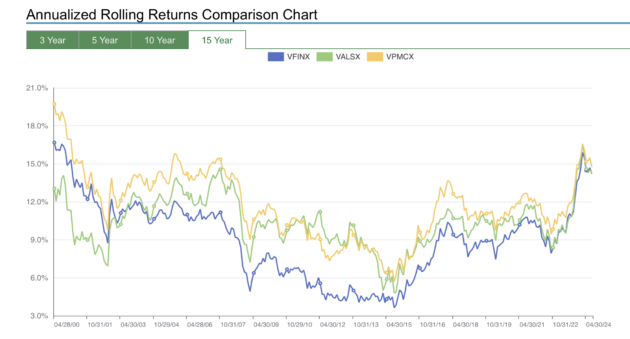
The Best Stock Funds In The Long-Term
In this newsletter, we unveil the ‘best’ long-term stock mutual fund! We discuss its investment methodology and use our own unique tools to measure it against other excellent long-term stock funds.
-
test for dentons-cohen-grigsby-pc-pension-plan match
Nothing but example
-
How to Build a Balanced, Diversified Portfolio with the BLOODWORKS NORTHWEST RETIREMENT PLAN
How to Build a Balanced, Diversified Portfolio with the BLOODWORKS NORTHWEST RETIREMENT PLAN Constructing a balanced, diversified portfolio is essential for long-term financial health, especially when it comes to retirement planning. As a participant in the BLOODWORKS NORTHWEST RETIREMENT PLAN, you have a range of investment options available. In this article, we’ll guide you through the process of constructing a well-rounded portfolio using the four-step RAID approach: Risk Assessment, Asset Allocation, Investment Selections, and Disciplined Rebalancing. We’ll focus on utilizing the low-cost index funds available to you whenever possible. Investment Options Available in Your Plan Here are the investment options available to you: Step 1: Risk Assessment The first step in constructing your portfolio is assessing your risk tolerance. Risk tolerance is the degree to which you’re comfortable with the potential for losses in your investments in exchange for the possibility of higher returns. Your risk tolerance should be influenced by your age, job stability, financial goals, and time horizon. To help decide how much of your portfolio should be allocated to stocks versus bonds, you can refer to the MyPlanIQ Get Started Now guide. Typically, younger investors with longer time horizons can afford to take on more risk by allocating a higher percentage to stocks, while those nearing retirement may want to shift more towards bonds for stability. Step 2: Asset Allocation After determining your risk profile, the next step is to decide how to allocate your investments across various asset classes. The main asset classes available to you in the BLOODWORKS NORTHWEST RETIREMENT PLAN include: You can use asset allocation templates discussed in MyPlanIQ’s Asset Allocation Portfolio Templates. For example, a balanced portfolio for a moderate risk investor might allocate 42% to US stocks, 18% to international stocks, and 40% to bonds. Step 3: Investment Selections Once you’ve determined your asset allocation, you’ll need to select the specific funds that match each asset class. For example: Emphasizing low-cost index funds where possible will help you minimize expenses and maximize returns over the long term. Step 4: Disciplined Rebalancing Regular monitoring and rebalancing of your portfolio are crucial for maintaining your desired asset allocation. Over time, market fluctuations can cause your portfolio to drift from its original allocation. For instance, if stocks outperform bonds, your portfolio may become more stock-heavy, increasing your risk level. Periodically rebalancing—selling some of the better-performing assets and buying more of the underperforming ones—helps you stay on track with your investment strategy. Example Portfolio with Moderate Risk Using the principles above, here’s an example of how you might construct a moderate risk (60% stocks, 40% bonds) portfolio: This simple portfolio provides broad diversification across key asset classes while keeping costs low, helping you stay aligned with your retirement goals. Conclusion Constructing a balanced and diversified portfolio is an ongoing process that involves regular monitoring and adjustments. By following the RAID approach—Risk Assessment, Asset Allocation, Investment Selections, and Disciplined Rebalancing—you can build a portfolio that aligns with your risk tolerance, financial goals, and time horizon. Remember, the key to successful retirement investing is to start early, stay consistent, and remain disciplined in your approach. For more information, refer to the MyPlanIQ Four-Step Guide for 401k Retirement Investing and the Asset Allocation Portfolio Templates.
-
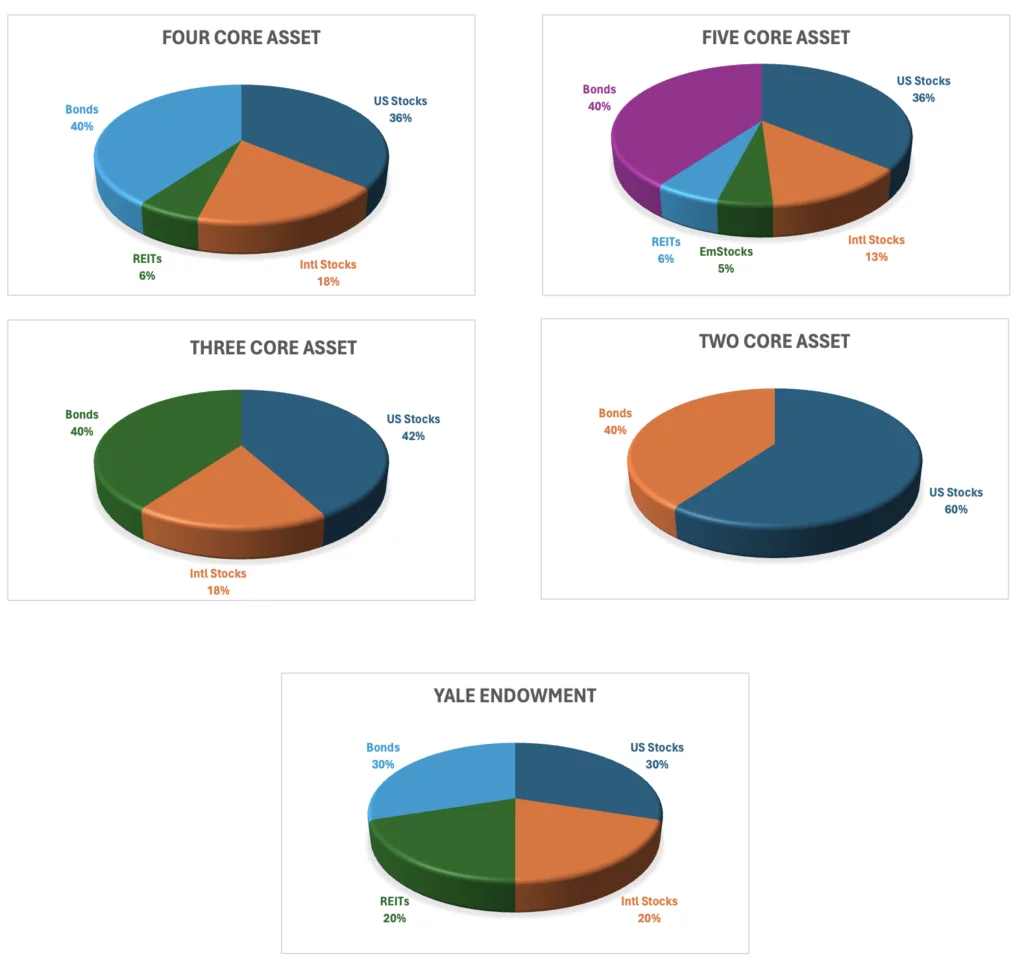
Asset Allocation Portfolio Templates for 401(k) Investments
This article shows the most popular asset allocation core portfolio templates for long-term investments such as a retirement investment account like 401(k) account, IRA or a taxable brokerage account.
-

Four-Step Guide for 401(k) Retirement Investing
Navigating the complex world of 401(k) retirement investing can be daunting, especially when faced with many investment options. However, by following these four simple steps, you can prudently construct your investment portfolios that suit your personal situation. These four steps are: Risk Assessment, Asset Allocation, Investment Selection, Disciplined Rebalancing & Staying the Course — RAID for short. Step 1: Risk Assessment Before delving into the array of investment options or funds given in your plan, it’s crucial to define your risk profile and investment horizon. Consider the following sub-steps: Once you have decided how much your risk asset allocation should be, the next step is to pick an asset allocation. Step 2: Asset Allocation Now that you’ve defined your risk profile, the next step is to determine the allocation of assets within your chosen risk profile. A straightforward yet effective approach to determining asset allocation is to select a template from various well-known lazy portfolios recommended by investment experts. These templates have been widely used by financial advisors and investment managers. Subsequently, adjust the risk asset allocation based on your risk profile. For further details, refer to Asset Allocation Portfolio Templates. Note: The asset allocation template you choose should align with the investment options available in your 401(k) plan. For instance, if your plan offers only US stock and bond funds, you will need to select a template that accommodates these two asset classes. Step 3: Investment Selection For each asset class you choose to invest, you’ll need to decide what funds in this asset class in your plan’s avaiable investment options to invest. There are several simple criteria one should follow: Step 4: Disciplined Rebalance & Stay the Course Set up a schedule for regular portfolio reviews and rebalancing to ensure that your asset allocation remains aligned with your long-term financial goals. It’s recommended to be cautious about excessive rebalancing, as it can potentially harm your investment returns, especially when done without a systematic and sound strategy. For the average investor, an annual rebalancing approach could be a prudent choice. Refer to the AAII (American Association for Individual Investors) article Selecting Asset Classes for Retirement Investments or this link on our site for more discussions on asset classes and fund choices. Disclaimer: The information provided above is for educational purposes only. If your specific situations require it, it is advisable to consult with a financial advisor or a professional to address your individual needs and circumstances.
-

Stock Seasonality Strategy: Consistency Leads to Long-Term Success
In this newsletter, we revisit a well-known stock anomaly: seasonality. We further demonstrate that this seasonality extends to other stock funds and balanced funds as well.
-
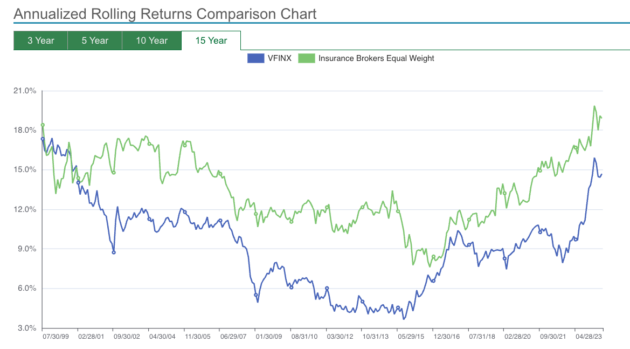
Quality Business Models Triumph: What Insurance Broker Stock Returns Can Teach Us
In this newsletter, we highlight stocks from a particularly excellent yet somewhat surprising industry—insurance brokers—that have consistently delivered higher returns compared to stock indexes such as the S&P 500.
-
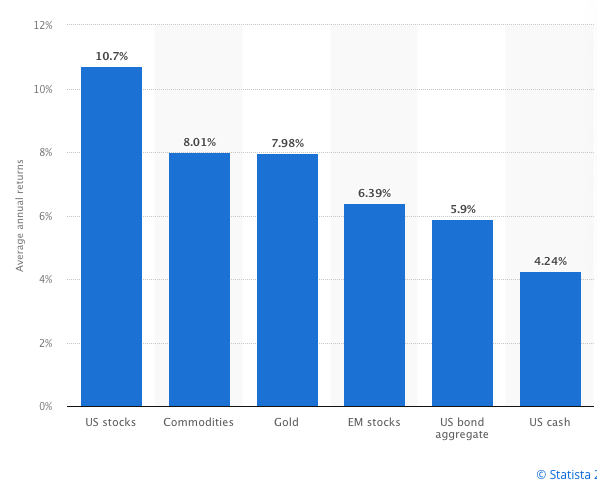
Gold’s Long-Term Performance: Historical Returns and Key Drivers
We review gold’s long-term returns since 1971. We further examine key drivers that are behind gold returns and point out these factors, inflation, inflation expectation, interest rates, economic uncertainties, international demand and geopolitical events, have a more complex relationship with gold prices.
-

150+ Years of Long-Term Earnings and Stock Returns of the ‘Conglomerate’ of Collective S&P 500 Index Companies
We look at over 150 years data on S&P 500 earnings and total returns. We then study the rolling returns and compare it with a moving average based portfolio. We conclude that S&P 500 index represents a fantastic ‘business’ to own.
-
Factor ETFs For Diversification & Return Improvement
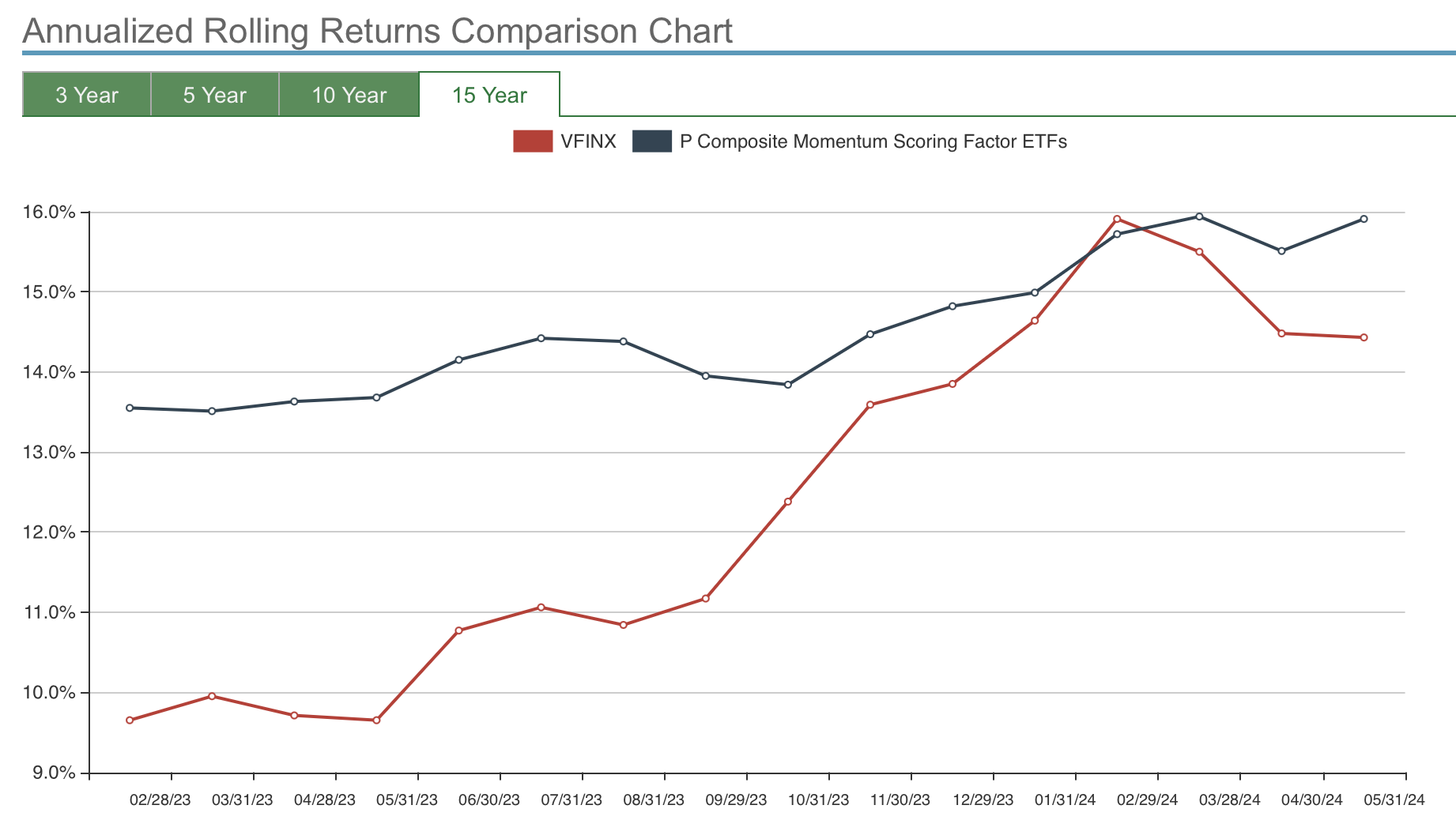
We review smart factor ETFs and a momentum portfolio based on these factor ETFs. We argue that major factor ETFs like Quality, Momentum, GARP, Minimum Volatility, Value and Size all have potential to outperform cap-weighted stock indexes such as S&P 500. These ETFs can be effective builindg components for a core portfolio.
-

Newsletter Collection Update
We list our latest newsletter articles since last update and briefly overview current market conditions
-
Total Return Investments vs. High Yields: Yield Chasing at Your Own Peril
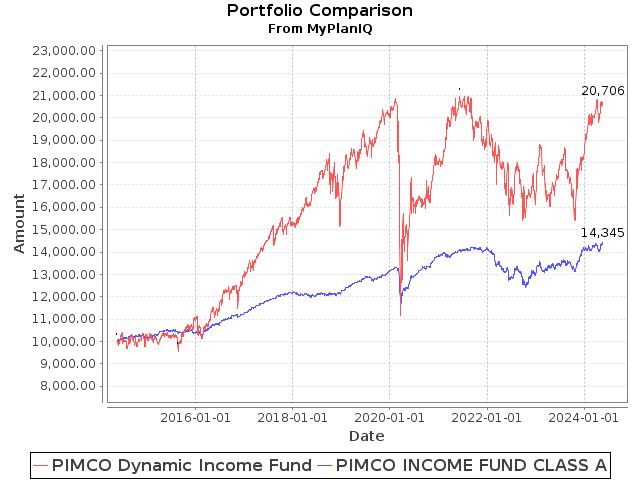
We examine various high dividend ETFs and a closed end fund and discuss how they fare in terms of total returns that combine both capital appreciation and dividend income.
-
Foreign Stock Investments — Currency Hedged Or Not?
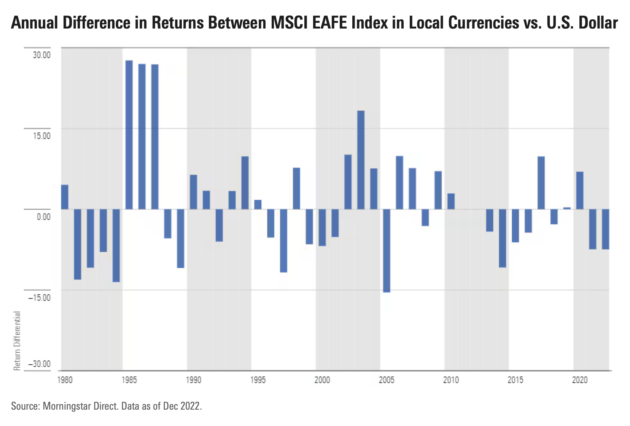
We delve into the details to examine the role of currency-hedged ETFs in international stock investing within an asset allocation portfolio.
-
Unlocking Investment Potentials With 401(k) Brokerage Link Accounts
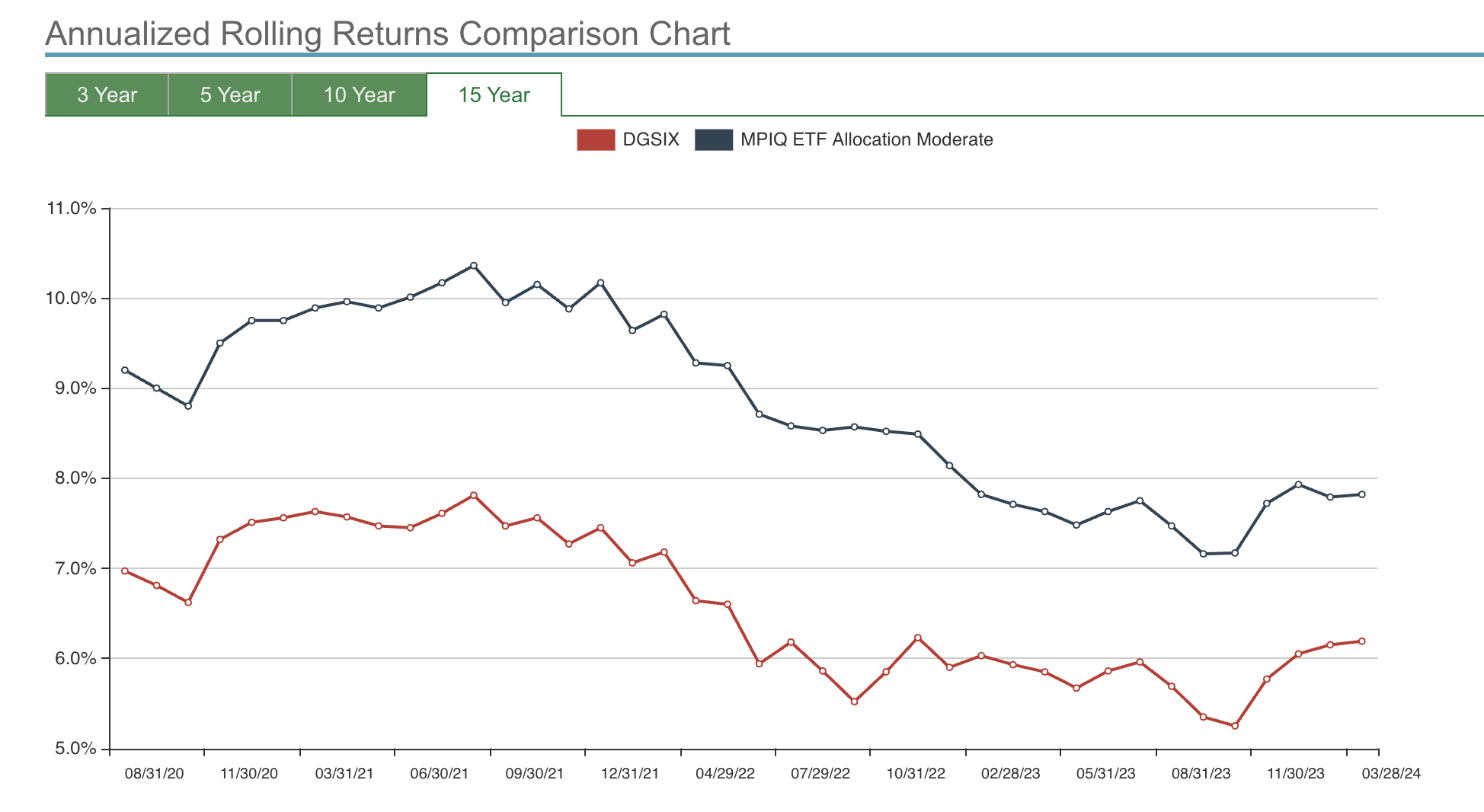
We discuss the pros and cons of 401(k) brokerage link accounts
-
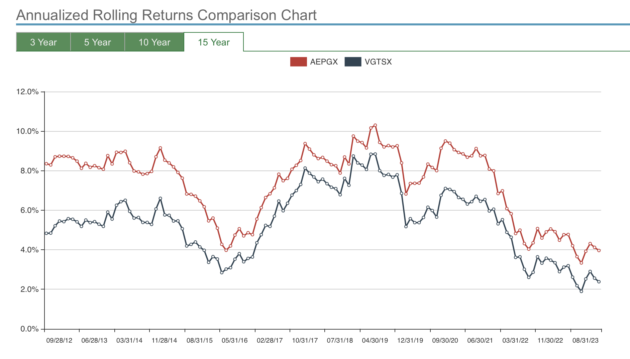
Ranking Biggest 401(K) Stock And Bond Funds
We discuss how to utilize our newly upgraded free comparison tool to better evaluate and compare ETFs, mutual funds and portfolios using rolling returns
